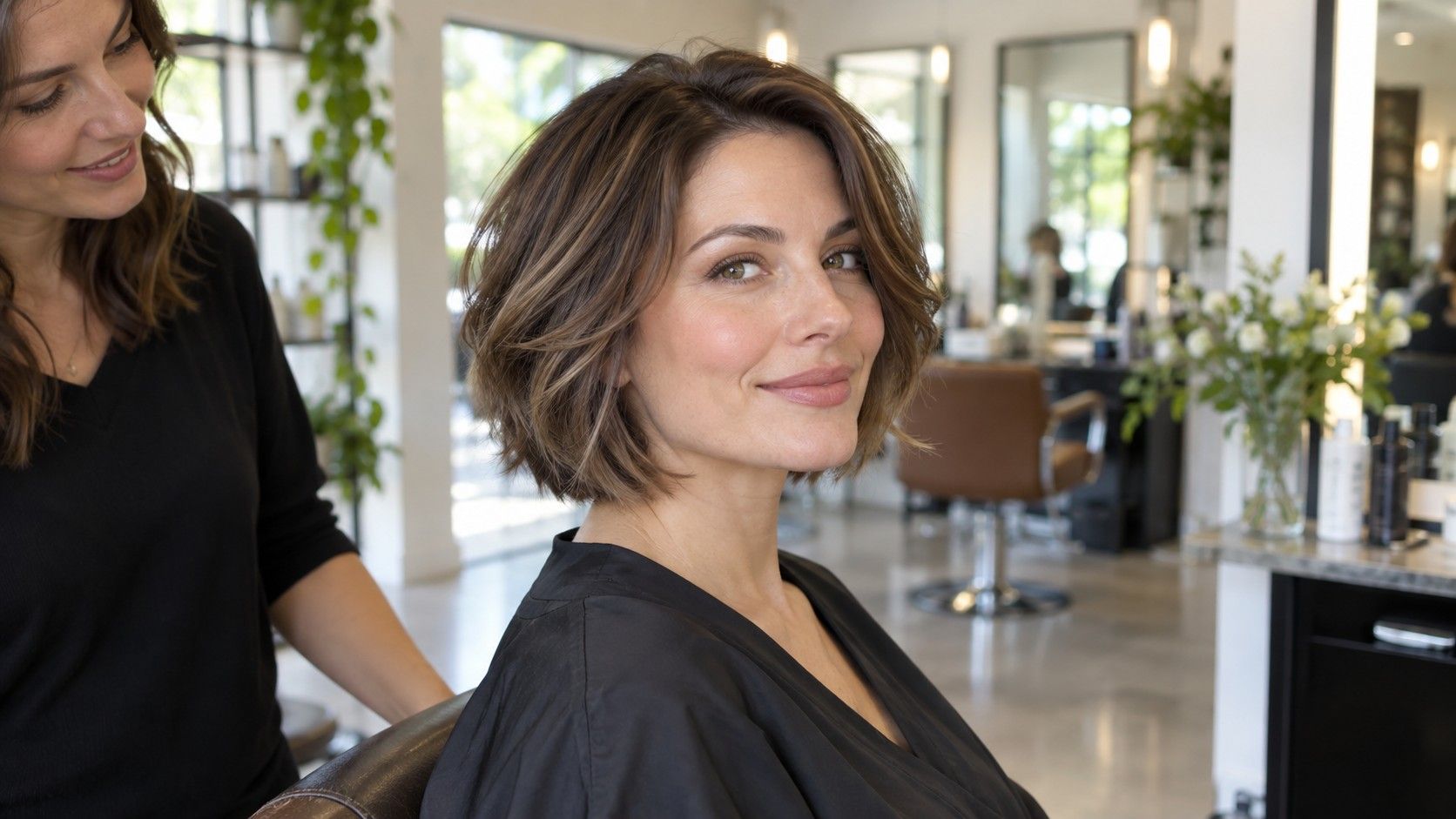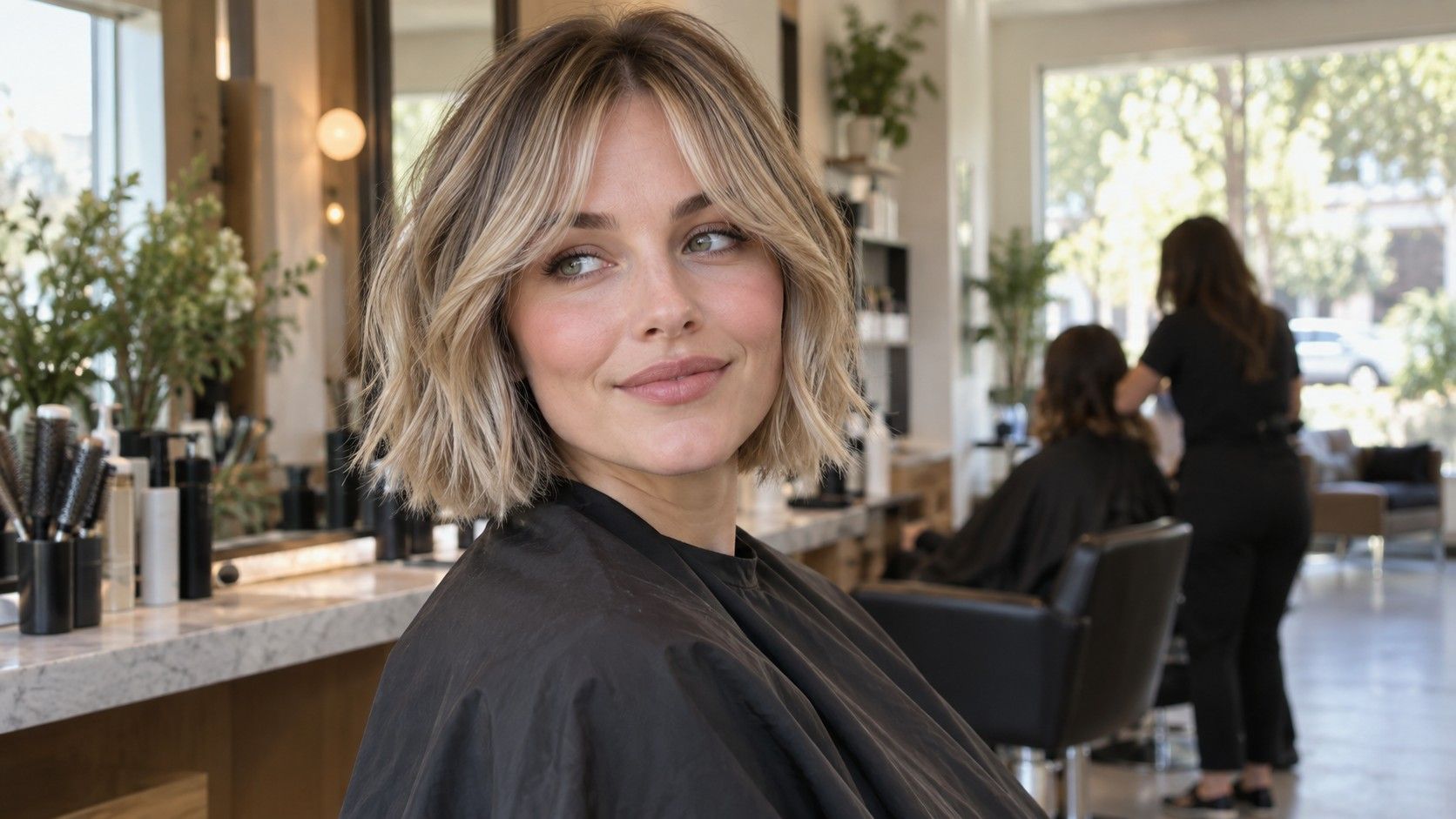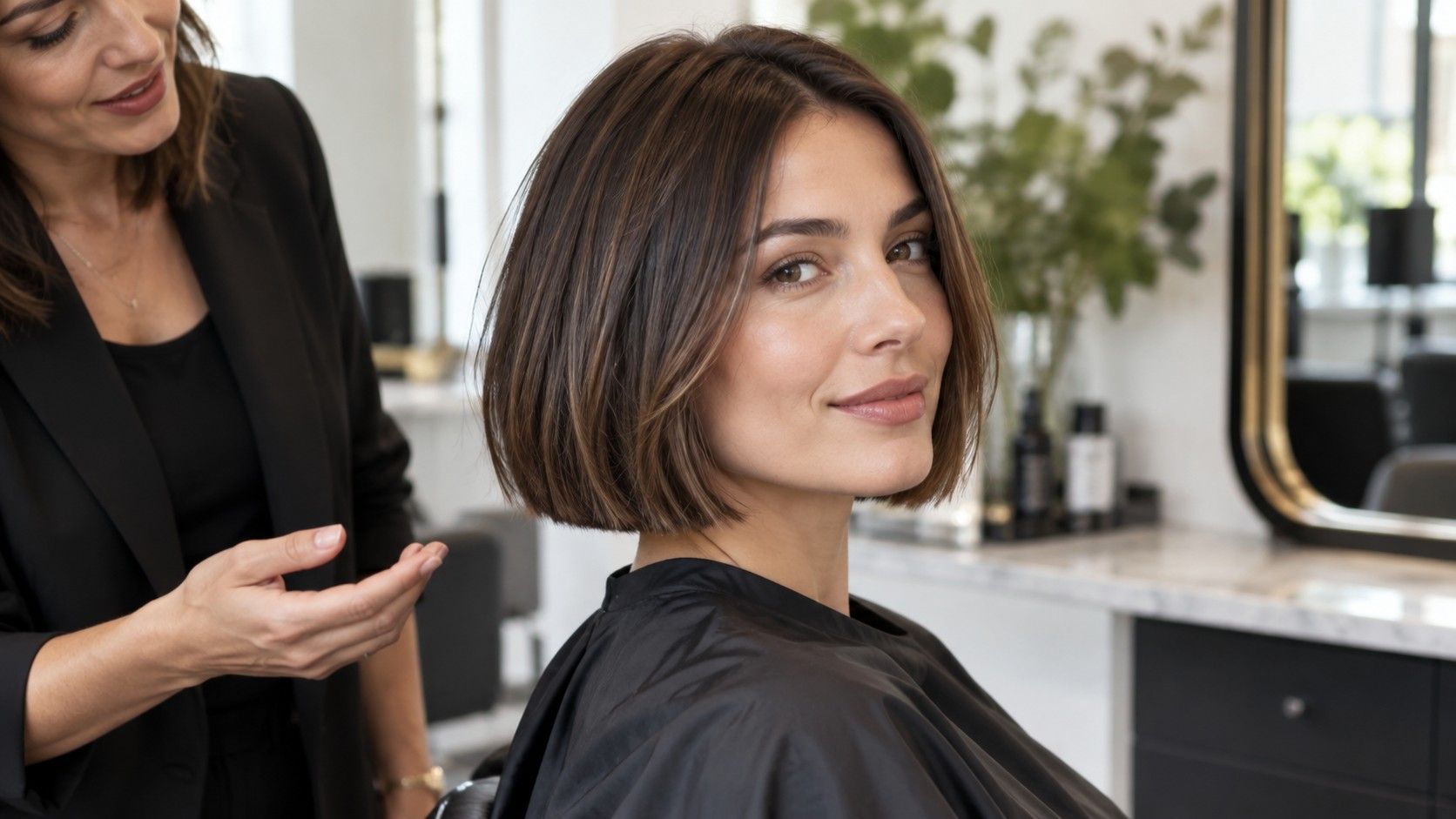
A shag haircut for wavy hair can make an uneven bend look lively and intentional, but it can also turn into a wide, dry-looking triangle when the layers are cut without respect for the actual wave pattern. The useful version is not simply a lot of short pieces. It is a controlled distribution of weight: enough movement around the face and crown to let waves form, enough density at the perimeter to keep the whole cut from dissolving into frizz.
Why wavy hair changes a shag
Wavy hair rarely behaves like a single texture. The hair near the nape may be almost straight, the sides may form loose S shapes, and the area around the temples may coil more tightly in humid weather. A shag built from one uniform layer pattern ignores those differences. The result can look balanced when wet in the salon, then expand at the crown and go flat at the ends once it dries at home.
Layering for your actual wave pattern
That is why a wavy shag haircut needs a plan for where volume belongs. Most people want lift near the crown and movement around the cheekbones, not width at every point between them. Layers should encourage that path. The perimeter still needs enough substance to frame the shoulders or jaw instead of appearing feathered away. A good shag lets waves group together; it does not force every strand to become a separate piece.
Face-framing layers without a disconnected front
Before the first layer is cut, look at the hair in its natural part and allow it to dry at least partly without being stretched smooth. This reveals where the wave springs and where it barely moves. Wet cutting gives a stylist clean control over the basic shape, especially on long hair, but wet hair can conceal how much a section will rebound. Dry cutting can refine individual wave groups, although it is not a magical replacement for a sound initial outline.
Ask for layers that are placed according to density, not copied from a diagram. Dense hair may need carefully removed bulk beneath the crown so it does not become helmet-shaped. Fine wavy hair often needs fewer, longer layers; too much removal makes the ends transparent and stops waves from clumping. The most flattering layered haircut for wavy hair usually leaves some solid weight below the occipital bone, where the head curves out at the back.
| Hair behavior | Useful layer approach | Common mistake |
|---|---|---|
| Fine, loose waves | Longer layers with a firm perimeter | Over-layering until the ends look sparse |
| Dense S-waves | Selective internal weight removal | Cutting every layer equally short |
| Mixed wave pattern | Refine sections after observing dry movement | Assuming both sides will spring the same way |
| Humidity-prone waves | Leave enough length for stable clumps | Using razor-thin ends that fuzz in damp air |
How to prevent a bulky crown
A bulky crown is often blamed on the hair being thick, but the location of the weight is usually the real issue. If the shortest layers start too high and too wide, wavy hair lifts outward instead of upward. The head then looks broad from the front while the lower lengths look comparatively thin. A better approach is to keep the very top slightly longer than expected and create lift through the way adjacent sections connect, rather than by cutting a shelf into the crown.
Parting changes this calculation. A deep side part can concentrate volume on one side, which may be useful for a soft, asymmetrical shag but can make a dense crown harder to manage. A center or soft off-center part distributes the hair more evenly. Test your normal part before the cut, including the way it shifts after you sleep. A beautiful crown built around a part you never wear will become a daily negotiation with a brush and dryer.
Face-framing layers are where a shag can feel personal, but they need to connect to the rest of the cut. A short piece at the cheekbone can open the face when it joins a longer side layer; a disconnected chunk can simply flick outward and demand heat styling. Consider where you wear glasses, where your hair naturally tucks behind an ear, and whether you prefer the forehead open. Those small habits decide whether a fringe or a curtain-like front layer is useful.
On wavy hair, the front pieces should be checked in the dry state because they often spring more than the lengths behind them. A fringe that looks safely long while wet can sit much higher after a diffuser session. If you are unsure, leave it longer first. It is easy to remove another half inch; growing back an over-short face frame changes the whole character of the wavy shag haircut for months.
Styling without flattening the wave
Start on very wet hair, because product spreads more evenly before the wave begins to separate. Use a light leave-in or cream through the mid-lengths, then a gel or foam if you need hold in humidity. The quantity should match density, not fear of frizz. Too little hold can leave the surface fuzzy, but too much heavy cream can pull the crown flat and make the ends look greasy before the day has begun.
Scrunch upward rather than brushing through once product is in. A diffuser is useful when it is treated as a way to dry the wave, not as a tool for blasting it into submission. Hover around the roots for lift, then cup the lower sections gently and hold still for several seconds. Constantly moving the diffuser breaks wave groups apart. Stop when the hair is mostly dry, let it cool, and only then soften any firm cast with clean, dry hands.
Humidity, refresh days and realistic texture
Humidity does not create bad hair; it exposes a haircut that has no stable structure for the wave to sit in. A little frizz around a wavy shag can look natural, especially near the face, but a cloud of short broken-looking pieces usually means the layers are too thin, the hair was brushed while drying, or the style lacks enough hold. Notice the conditions in which your hair changes most: rain, a crowded commute, exercise, or simply a warm bathroom.
On the next day, avoid soaking the whole head unless necessary. Mist the flattened crown, smooth a tiny amount of product over the most frizzy sections, and re-scrunch only the wave groups that lost their shape. Refreshing a few areas preserves the natural variation that makes a shag interesting. Trying to make every wave identical often removes the ease people wanted from the cut in the first place.
What to revisit at the next trim
Give a new shag two or three ordinary wash days before deciding it is wrong. Take a few pictures in daylight from the front, side and back, then notice patterns: perhaps the left temple springs too short, the crown becomes wide after sleep, or the lower edge is losing density. Those observations are more valuable at a trim than saying only that the hair feels different from the appointment day.
At the next visit, refine one or two issues rather than asking for more layers everywhere. A small adjustment to the crown, a longer face frame, or a stronger perimeter can change how the whole style behaves. The best wavy shag haircut evolves with your real texture and routine. It should make the waves easier to recognize and style, while leaving enough weight that the shape still feels grounded when the weather refuses to cooperate.