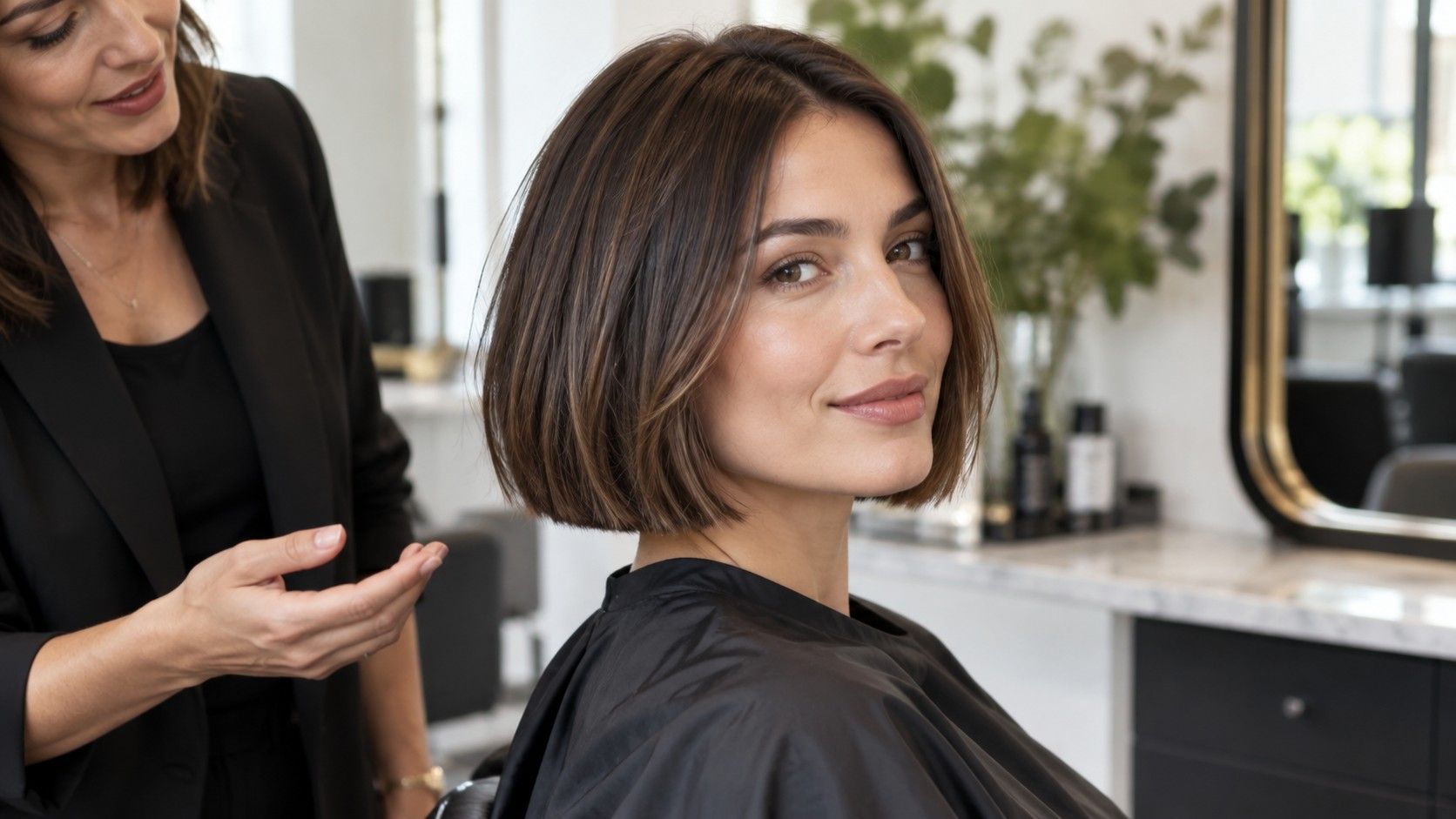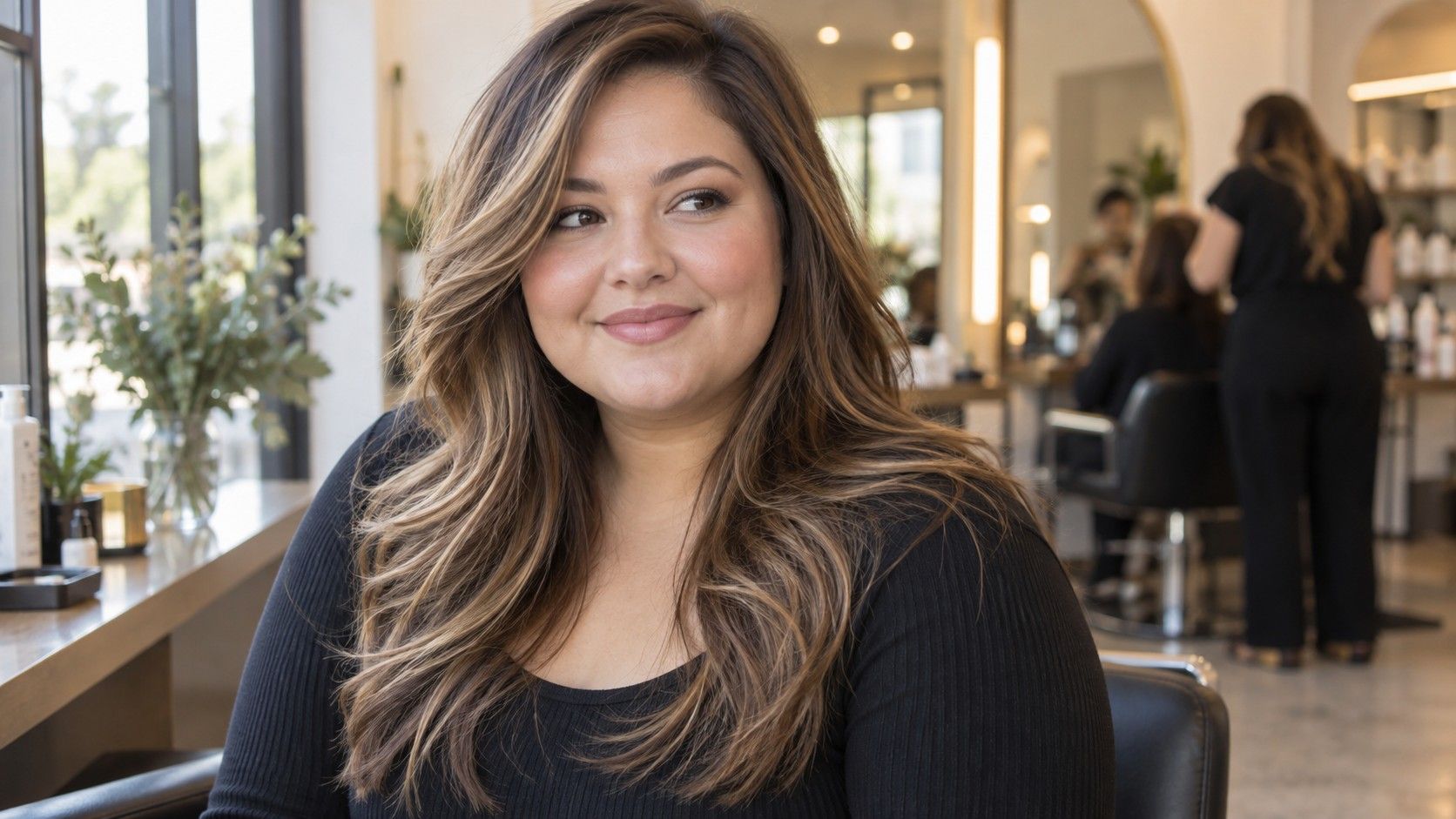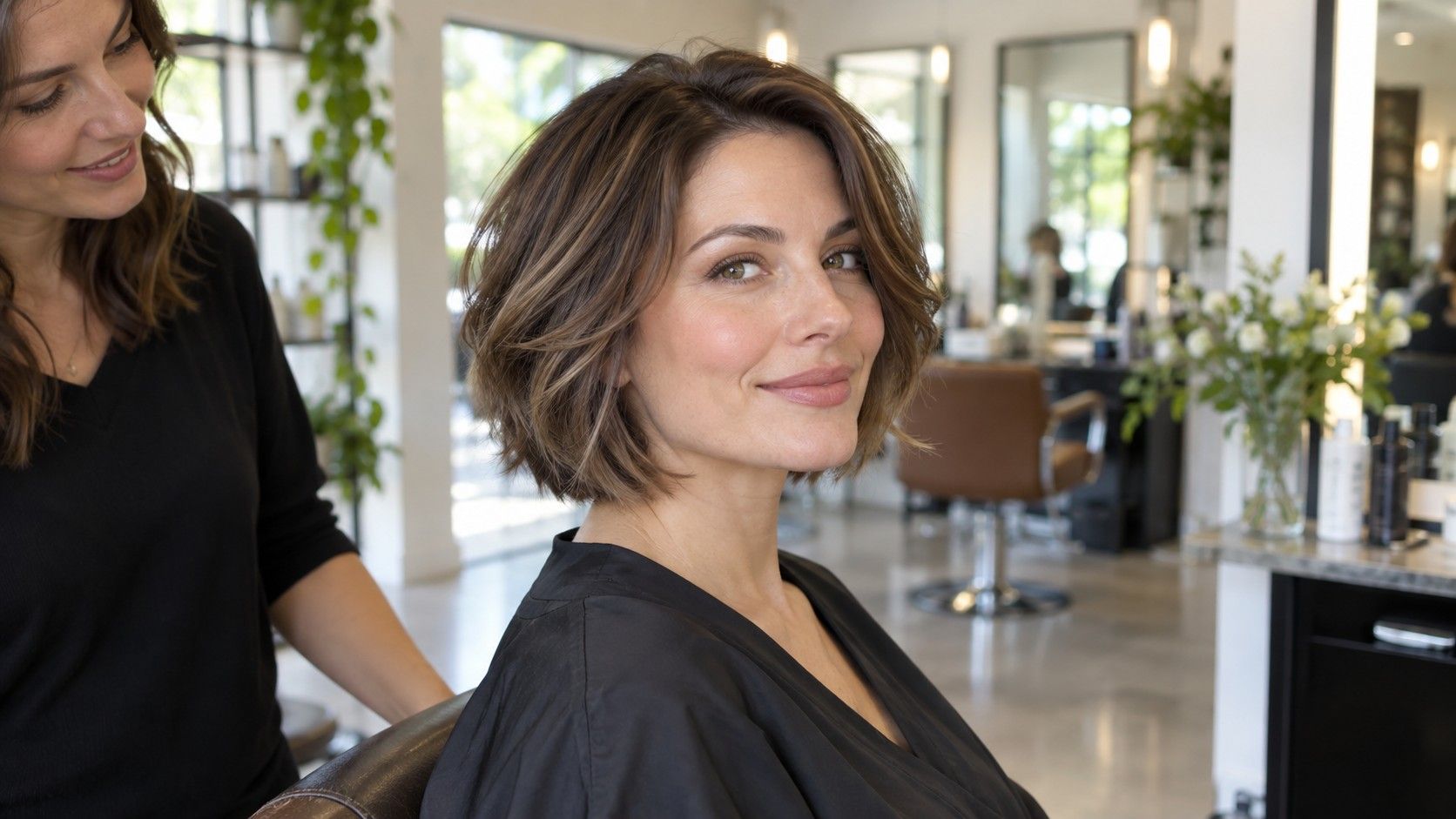
Face shape is a useful way to describe proportions, not a rulebook that gets to veto a haircut. A diamond face often has wider cheekbones with a narrower forehead and jawline, so the question is usually where to place softness and width. The best hairstyles for diamond faces make the features feel connected rather than trying to disguise them.
See the proportions before asking for a correction
Look at a straight-on photo with your hair pulled back, taken at eye level rather than from above. Notice the temples, the point of the chin, and the widest part of the cheeks. The useful observation is not whether your face fits a diagram perfectly; it is whether a haircut currently makes the cheekbone area seem isolated or gives the forehead and jaw enough visual company. Small changes near the face can shift that balance more than a dramatic loss of length.
Choose lengths that give the cheekbones room
Hair texture matters alongside proportions. Fine straight hair may need a fuller edge near the jaw, while thick waves can create that width naturally and need restraint at the cheeks. Consider your usual parting too. A severe center part can make the upper face look narrower on some people, yet it can look clean and balanced when there is movement around the temples. Start with what your hair does without heat styling, because that is the version you will live with most often.
Compare short and long styles by daily effort
A soft bob that ends around the jaw can be effective because it adds visual presence below the cheekbones. The line should not be a rigid shelf: subtle texture or an inward bend keeps it from looking boxed in. A chin-length cut is easier to wear when the ends have enough density. If your hair is fine, aggressive thinning can remove the very weight that makes this length useful.
Medium lengths are flexible when layers begin below the cheekbone rather than directly beside it. This leaves the widest part of the face clear and lets movement develop around the jaw and collarbone. Long hair can work beautifully too, particularly with face-framing pieces that begin around the chin. The risk is a single heavy curtain of hair that narrows the forehead while adding no shape below. Ask for placement, not simply more layers.
| Length or detail | What it can do | Question to ask |
|---|---|---|
| Soft jaw-length bob | Adds presence around the lower face | Will the ends stay full with my density? |
| Collarbone layers | Keeps movement below the cheekbones | Where will the shortest piece dry? |
| Long face-framing layers | Breaks up a heavy long shape | Can they start near the chin, not the cheeks? |
| Textured crop | Shows the cheekbones while softening temples | How much crown volume will it need each morning? |
Use bangs and partings to soften the upper face
A side fringe can introduce width near one temple and create a gentler route from forehead to cheek. It does not need to be a thick, solid block. A longer fringe that can separate slightly is often easier to maintain and less likely to sit awkwardly after a humid commute. Let the shortest point be chosen with your natural bend or wave in mind; a fringe that is cut perfectly straight while wet can lift in an unplanned way.
Wispy curtain sections can also work when they are long enough to move past the widest part of the cheeks. The mistake is placing two short pieces exactly at that point and then wondering why the middle of the face looks broader. Try your existing parting in several positions before cutting anything. A modest off-center part is a low-risk test, and it may reveal that a haircut needs only a small adjustment rather than a complete redesign.
Short styles for diamond shaped face proportions can be lively, especially a textured pixie with softness around the temples and a slightly longer fringe. They expose the cheekbones rather than fighting them, so the finish matters: too much height at the crown with very flat sides can make the face feel longer and narrower. A small amount of side movement is usually more useful than a towering top section.
Longer styles offer more options but can become repetitive if every day means the same center-parted wave. Add a low ponytail with loose pieces around the jaw, a half-up style that leaves width at the sides, or a deep side part on days you want a different outline. These are not tricks to correct a face. They are practical ways to see which direction feels like you before committing to haircuts for diamond face proportions.
Test the idea before making a major cut
Use pins, a temporary parting, and simple bends from a round brush to imitate the outline you are considering. Tuck each side behind the ears to see where a shorter bob would expose the jaw. Pin long layers upward and leave a few pieces at chin level to judge their placement. Take photos in ordinary light and revisit them the next day; a quick mirror decision often favors novelty over a shape that will suit your routine.
At the salon, explain the feature you want to emphasize rather than naming only a face category. You might want a softer temple area, more fullness near the jaw, or a fringe that can be worn open. Mention whether you air-dry, use heat, and change your parting during the week. A good cut leaves several styling routes available. It should still make sense when you have five minutes, no special tools, and no interest in recreating the salon finish.
Give a new cut a fair trial before judging it. The first wash may not reproduce the salon technique, and a parting can settle differently after a few days. Work with the direction of growth instead of repeatedly forcing the front into a position it rejects. If something feels wrong, identify the exact issue: too much width at the temples, a layer that starts too high, or an edge that loses fullness. Specific feedback makes a small refinement possible and protects you from solving a minor imbalance with an unnecessarily dramatic change.
The same principle applies to styling products and tools: use only the amount that helps the outline hold. Heavy buildup can make fine sections cling together, while a very stiff finish can erase the movement that made the cut appealing. A little flexibility leaves room to change the parting or tuck one side back when the day calls for it.