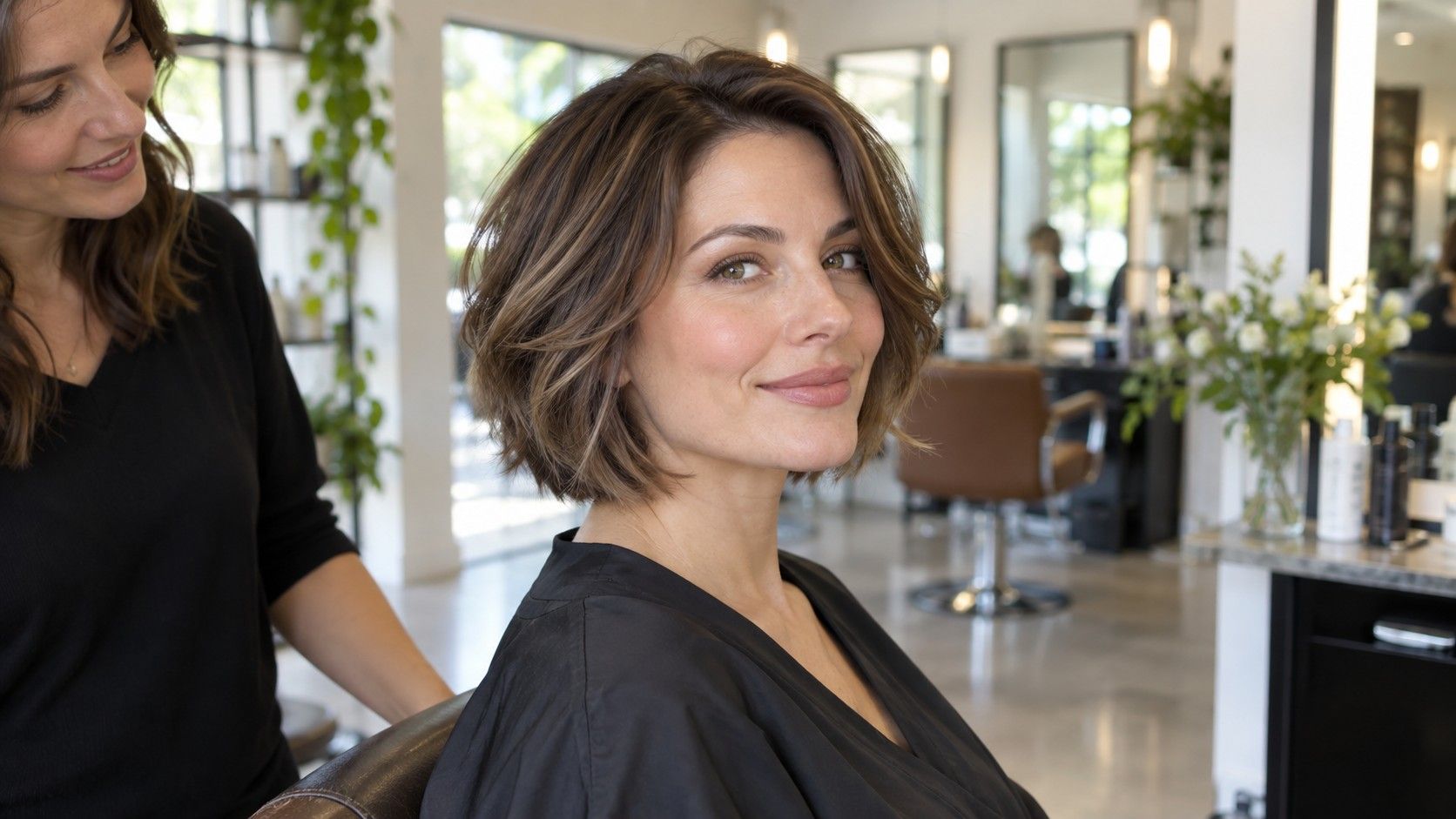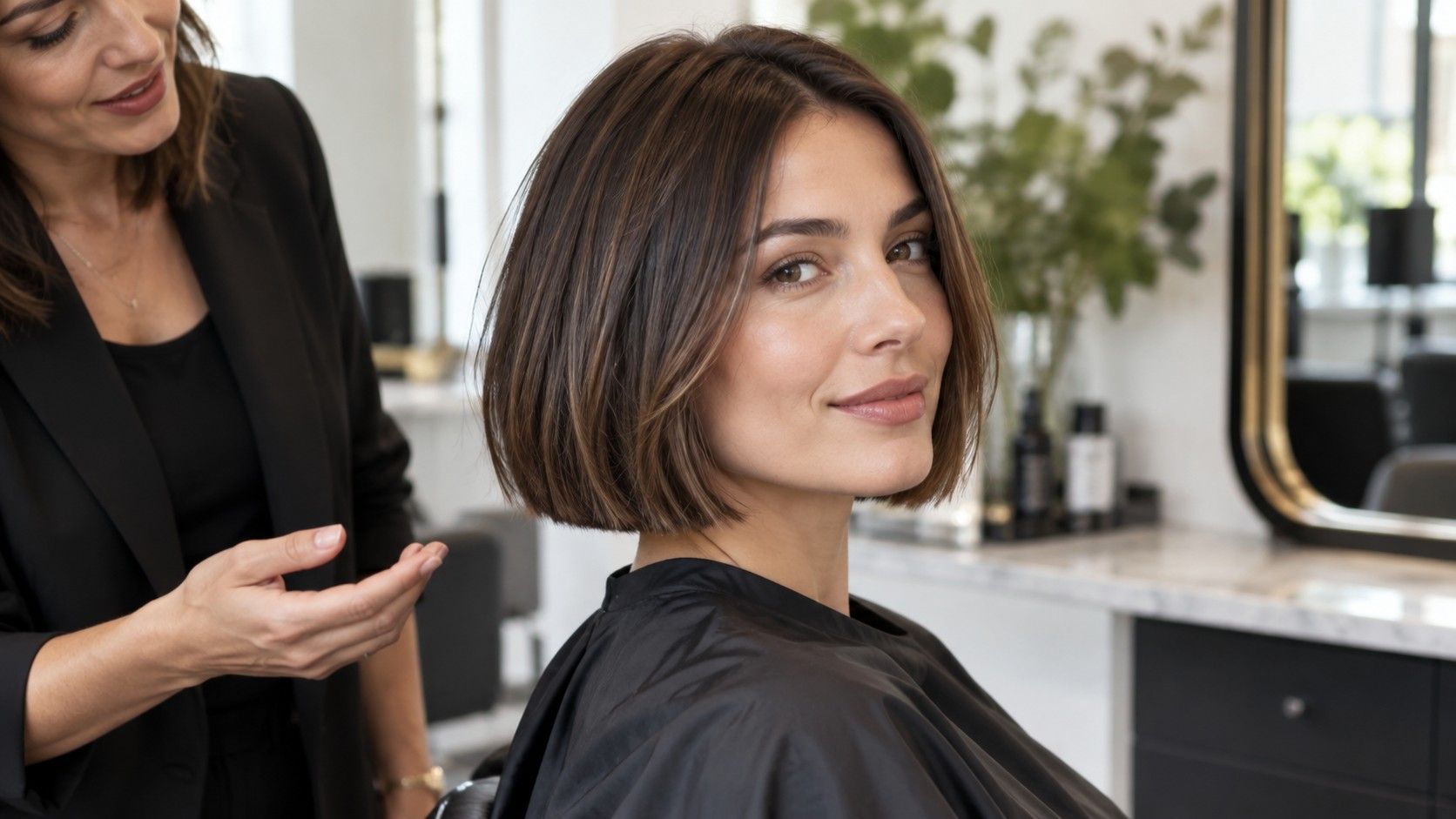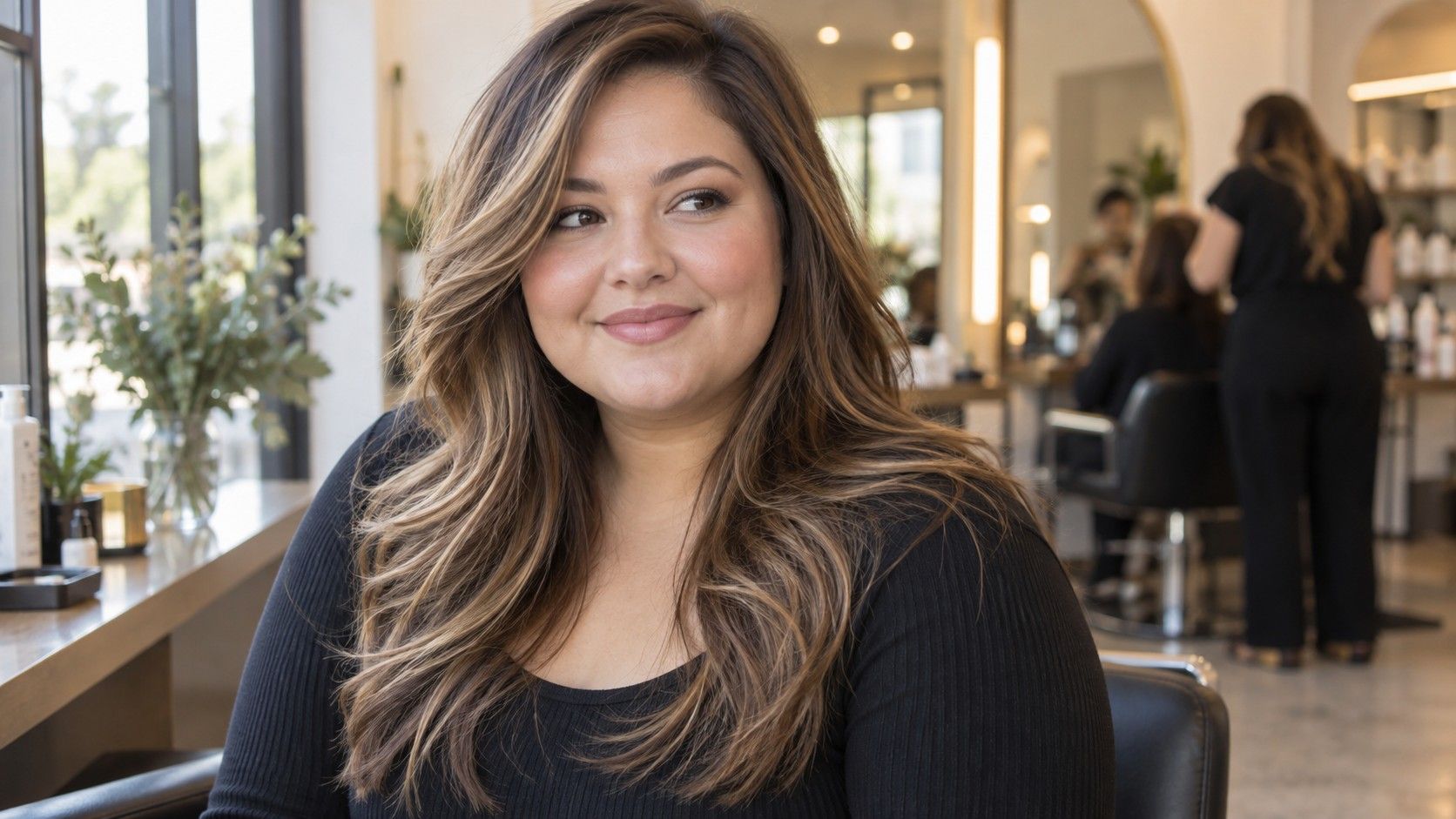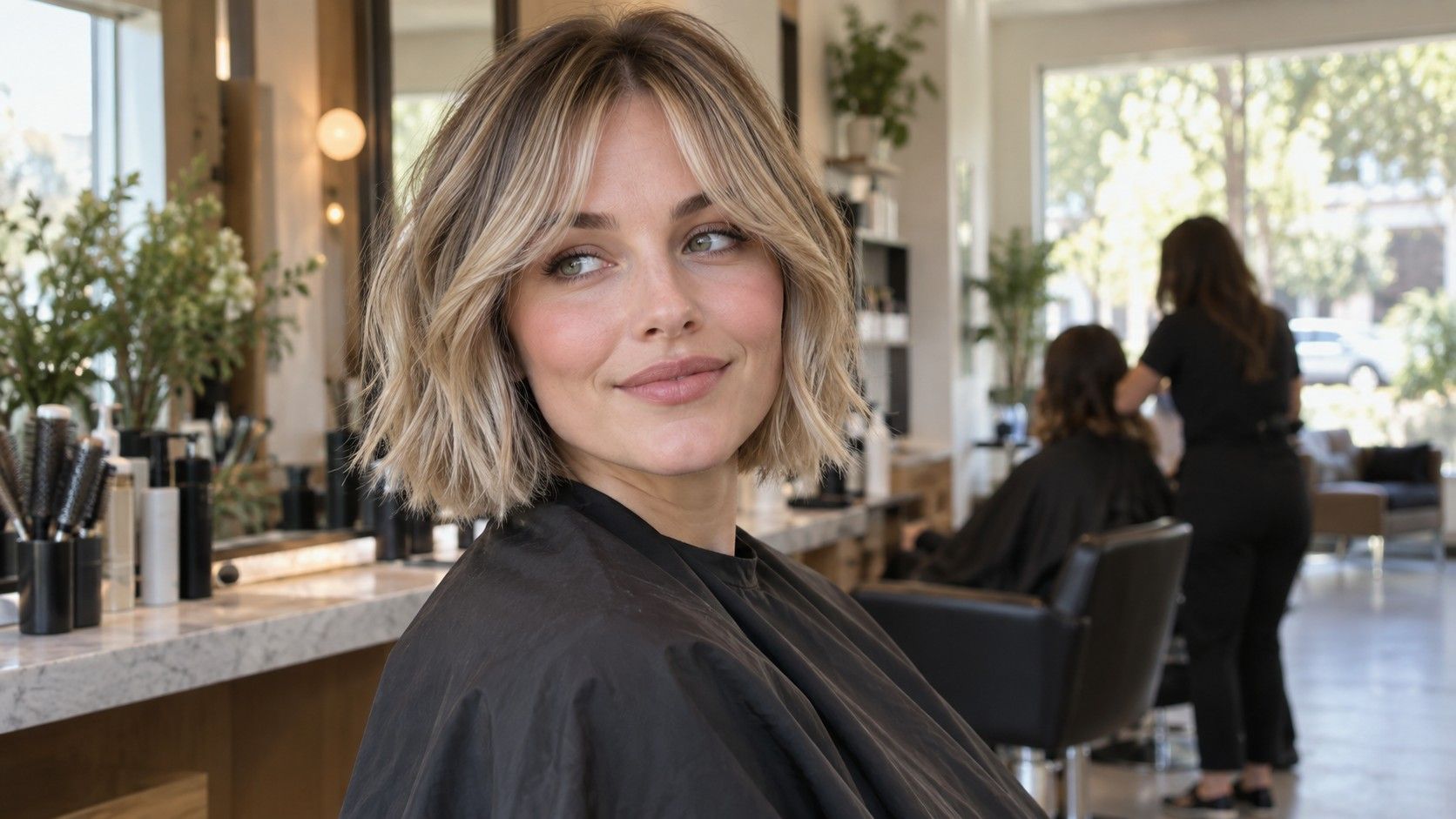
A heart-shaped face is often described as a wider forehead that narrows toward a small chin, but that shorthand is only useful when it helps you choose where hair should sit. The best hairstyles for heart shaped faces usually leave some softness near the temples and create presence around the cheekbones or jaw. That can be a bob, a long layered cut, or a cropped style; the important part is how the cut behaves on your own density and parting.
Start with the proportions you actually see
Stand a little farther from the mirror than you normally do and look at the outline rather than individual features. Notice whether the forehead feels broad because of the hairline, whether the cheekbones are the widest point, and how quickly the face tapers below them. A heart-shaped face can have a pronounced widow's peak, a rounded hairline, or neither. Those details change whether fringe feels framing or simply heavy.
Put fullness beside the face, not only above it
Haircuts for heart shaped face shapes work best when they answer one visual question: where should the eye pause before it reaches the chin? A cut with movement at lip or chin level often does that naturally. It is not about hiding the forehead. A clean forehead can look striking; the issue is avoiding a pile of width at the crown with no counterweight lower down.
A chin-length bob is a reliable short option
Volume placement matters more than the name of the haircut. Soft bends that begin around the cheekbones, a tucked-under bob perimeter, or layers that turn outward near the jaw all add width where a tapered face can welcome it. With naturally straight hair, a blow-dry that curves the ends slightly inward can make a simple shoulder-length cut look considered without looking over-styled.
Be cautious with a very high, rounded crown combined with flat sides. It can exaggerate temple width and make the chin appear smaller by comparison. This does not mean you must avoid height. A little lift at the roots is useful when it is paired with texture at the sides. Ask your stylist where the widest part of the finished silhouette will land after you wash it at home, not just when it is freshly finished in the chair.
A chin-length bob is one of the most adaptable styles for heart shaped faces because its visual weight arrives near the narrowest part of the face. A blunt outline can look polished on fine to medium hair, while a lightly textured edge keeps dense hair from forming a helmet. The length does not need to hit the exact point of the chin; somewhere between the corner of the mouth and the upper neck can work, depending on your jawline and neck length.
For a quieter finish, keep the back only slightly shorter than the front and avoid stacking too much bulk at the crown. A deep side part can give the front a graceful sweep, especially if one side is tucked behind the ear. If your hair bends in humidity, leave enough length around the face that the bend reads as softness rather than as a random kick.
Medium and long cuts need purposeful layers
Long hair does not automatically flatter every heart-shaped face, but it gives you several places to build balance. Long layers starting below the cheekbones keep the upper face open while stopping the ends from hanging in one narrow column. A face frame that begins at the lip or jaw is often more useful than a short layer that springs out at the temples.
Soft curls are especially helpful when their widest point sits through the middle and lower lengths. Think loose, brushed-out movement rather than tight ringlets placed only at the crown. If you prefer a sleek finish, a low ponytail with a few relaxed pieces around the face can create the same lower emphasis. Keep the pieces substantial enough to remain visible after an hour, rather than pulling out two wisps that disappear immediately.
Choose bangs for their grow-out, not their first photo
Curtain fringe is popular for a reason: it can soften the transition from forehead to cheekbone without covering the whole upper face. On a heart-shaped face, the center should be light enough to separate naturally, with the longest points blending toward the cheekbones. A heavy straight fringe can also be beautiful, but it asks for more frequent trims and more deliberate styling, especially if there is a strong cowlick.
Before committing, ask where the fringe will sit when it air-dries and whether you wear glasses, a center part, or a side part most days. Those small habits determine whether bangs become useful framing or a daily negotiation. A longer side-swept fringe is the lower-maintenance middle ground: it can be tucked away on rushed mornings and reshaped with a round brush when you want more definition.
Compare common cuts by their real maintenance
| Cut | Where it adds balance | Practical watch-out |
|---|---|---|
| Chin-length bob | Jaw and lower cheek area | Needs a trim before the line loses shape |
| Long layers | Cheeks through lower lengths | Layers placed too high can widen the temples |
| Soft pixie with side fringe | Cheekbones and one side of the face | Requires regular shaping to keep the fringe intentional |
| Collarbone cut with bends | Jawline and shoulders | Ends need styling if your hair is very straight |
Bring useful questions to the salon
Show a stylist pictures with hair texture close to yours, then explain what you do on an ordinary Tuesday. Say whether you air-dry, use heat once a week, tie your hair back for work, or avoid trims until the last possible moment. These answers matter more than a celebrity reference because they reveal how much shape the cut needs to hold by itself.
Ask where the layers will start, how the perimeter will look after six weeks, and whether the suggested part is essential to the result. If the answer depends on daily hot tools but you do not enjoy using them, change the plan. The most convincing styles for heart shaped faces are not the ones that erase a face shape; they are the ones that still look balanced after the salon finish has loosened.