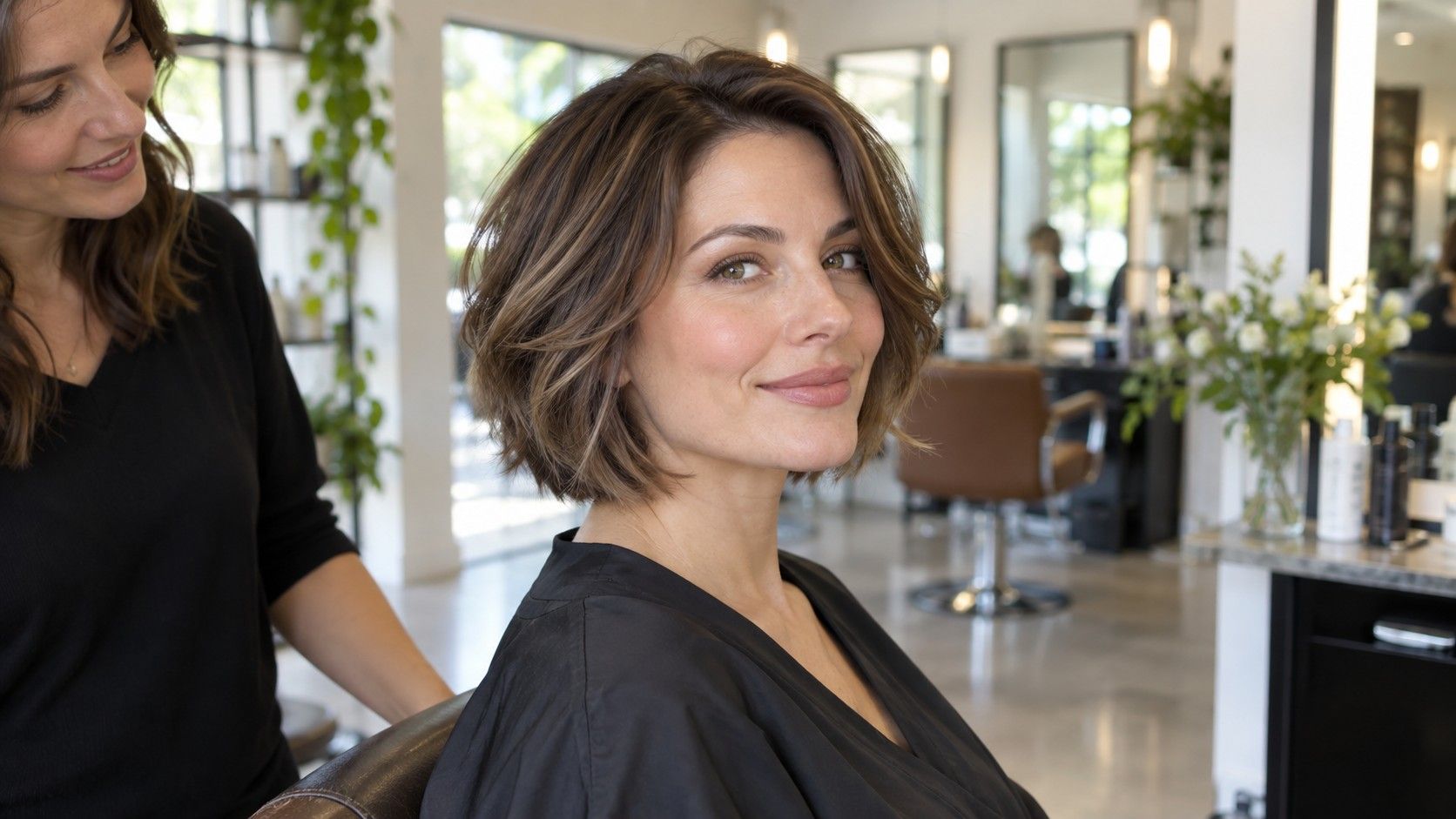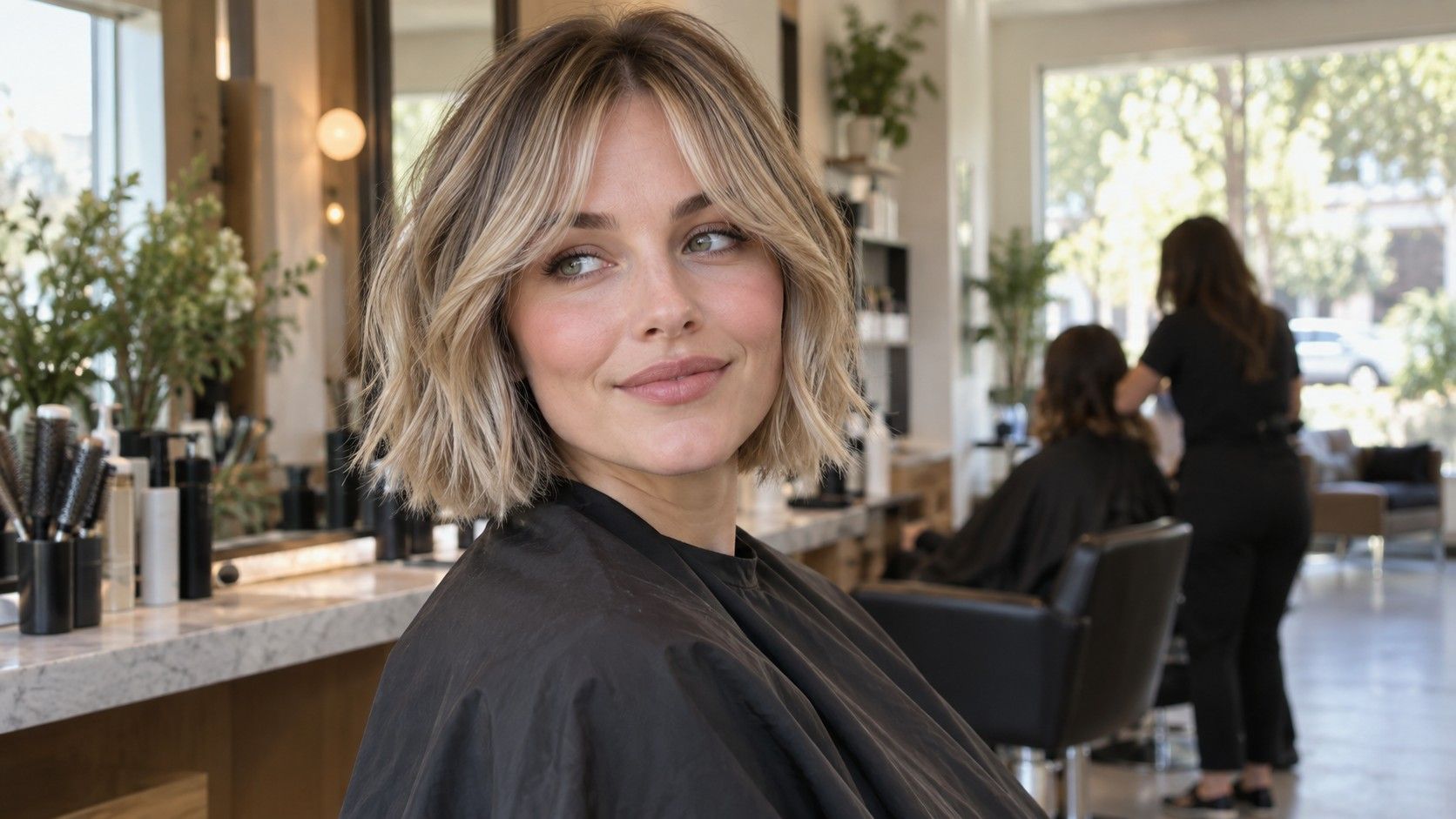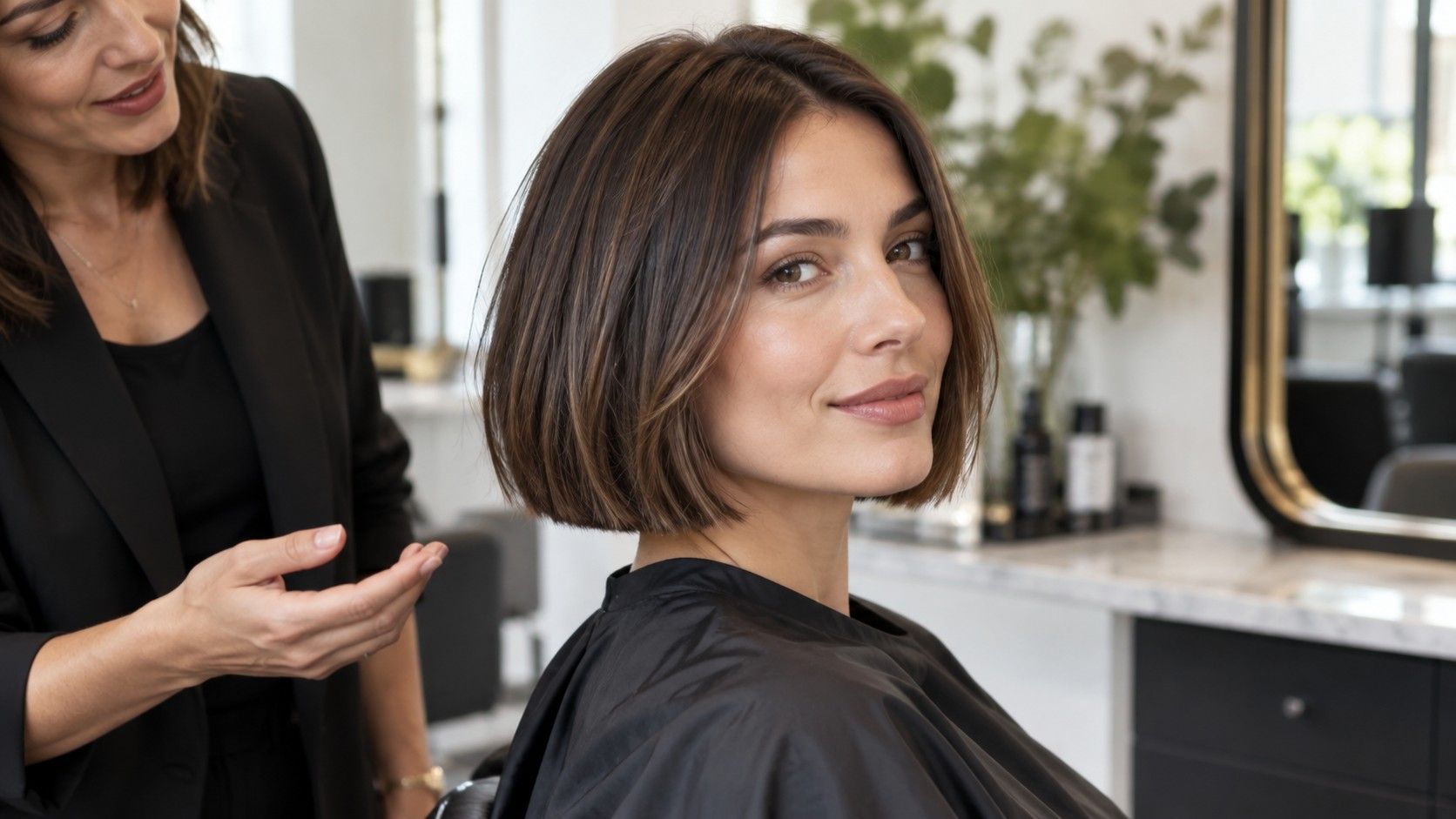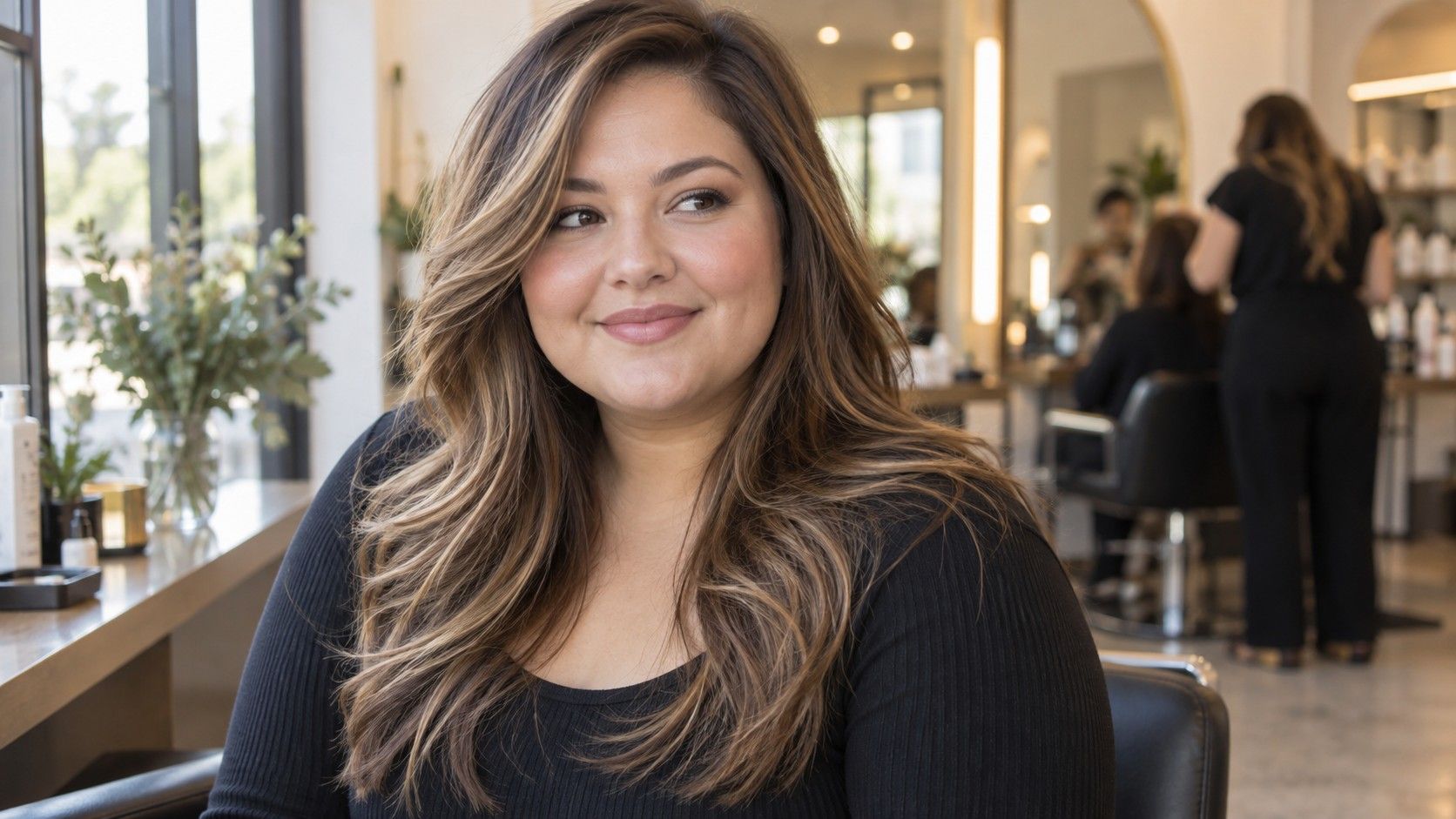
A round face often has similar width at the cheeks and a softly curved chin, but that description is only a starting point. The useful question is not how to hide anything; it is where you want the haircut to place attention on an ordinary day, after a commute, a workout, or a quick blow-dry. The best hairstyles for round faces usually create a little height, a vertical line, or an intentional angle while still working with the hair you actually have.
Start with the outline you see when hair is dry
Before choosing a cut, look at your hair in its normal state rather than in a tightly pulled-back photo. Notice where it expands: some people have fullness at the temples, others at the cheeks, and others only at the ends. A round face can carry a blunt cut beautifully, but a strong horizontal line exactly at the widest part of the cheeks may make the whole silhouette feel wider than intended. Moving that line below the chin, above the cheekbones, or breaking it with texture changes the result more than chasing a named trend.
Choose lengths that give the face room
Length is part of the geometry, but so is the parting. A center part creates a clean vertical seam and can look striking when the hair falls past the jaw. A deep side part gives lift at one temple and lets a fringe sweep diagonally across the forehead. Neither is automatically better. Test both with dry hair, then turn your head and check the profile. The right choice is the one that still looks purposeful when one side has slipped behind an ear.
Bangs work when their direction is clear
For many haircuts for a round face, the easiest route is to keep some movement below the cheekbone. A collarbone-length cut with long internal layers lets the eye travel down rather than stopping at the widest point. A long bob can be especially practical: ask for the front to sit a little longer than the back and for the ends to be softened, not stacked into a bulky shelf. That shape works with a sleek finish, a loose bend, or air-dried texture, so it is less dependent on a perfect salon blowout.
Short hair is not off limits. A textured pixie with height at the crown and a longer front section can look crisp without feeling severe. The detail to discuss is the side area: very rounded, puffed-out volume at ear level can compete with the cheek area, whereas close but not flat sides keep the shape deliberate. If you like a cropped cut, bring photos showing the front, side, and back. A single frontal image cannot tell a stylist where the weight is sitting around the head.
| Length | Useful shape detail | Everyday check |
|---|---|---|
| Short | Height at the crown and an angled fringe | Make sure the sides do not balloon after air-drying |
| Medium | Long bob or layered cut below the chin | Check where the ends land when you tuck one side |
| Long | Long layers with movement beginning below the cheekbones | Keep enough shape so the hair does not become a heavy curtain |
Use layers to create movement, not a helmet
Face-framing layers are often suggested for round faces, but their starting point matters. Short pieces that flip outward right at the cheeks can add width; longer pieces that begin around the lips, chin, or collarbone usually make a calmer frame. Ask whether the layers will still be visible in your natural texture. Fine straight hair may need subtle internal layering and a clean perimeter, while dense wavy hair can handle more visible graduation without becoming triangular.
Crown volume is another tool, though it should be modest. A little root lift can make the head shape look more balanced, especially with a side part. Huge volume at the top paired with flat lengths can look dated and takes too long to recreate. A round brush at the roots, a clip while the hair cools, or simply switching the part for an evening can be enough. If your hair is very smooth and slips flat, ask for a cut that gives the roots some support instead of relying on product every morning.
There is no ban on bangs for a round face. The safer decision is to avoid treating all fringe as one category. Wispy curtain bangs that open around the center can create a soft vertical break, especially when their longest pieces continue into cheekbone-to-jaw layers. Side-swept fringe gives an obvious diagonal and is forgiving as it grows. A full straight fringe can also work if it has enough texture and the rest of the cut has length or lift; it is simply a stronger statement that needs regular trims.
Ask your stylist to show you the fringe before it is cut too short. Hair springs upward as it dries, particularly with a cowlick or wave at the front. Tell them whether you wear glasses, whether you push hair behind your ears, and how often you are willing to style it. The most flattering bangs are not helpful if they split in the middle by 10 a.m. or fall into your eyes whenever you look down at a screen.
Match the styling finish to your actual routine
Styles for round faces do not need to be sculpted. Loose waves placed from the mid-length downward can add an elongated, relaxed line; wrapping every section in the same tight curl often creates a rounded mass. For a quick style, bend a few front sections away from the face, leave the ends slightly straighter, and keep the roots lighter than the middle. That pattern reads as movement rather than as a uniform bubble around the head.
Straight hair benefits from an intentional finish too. A smooth long bob with the ends turned slightly inward can define the jaw area, while a center or off-center part supplies the vertical line. If you usually tie your hair back, test the cut in a low ponytail and a claw-clip twist before committing. Leave a couple of longer pieces at the front only if you enjoy wearing them loose; otherwise they become an annoying styling task rather than a feature.
Have a useful salon conversation instead of asking for a face-shape rule
Bring two or three references that share the same quality you want: perhaps a collarbone length, airy movement around the face, or an angled front. Then explain what tends to go wrong. You might say that your ends widen at the cheeks, your crown goes flat by lunchtime, or your fringe separates because of a cowlick. Those observations are more useful than asking for the one correct haircut for a round face. They give the stylist something practical to solve with length, weight removal, and placement.
Before you leave, ask how the cut will grow over the next eight to twelve weeks and which one styling step matters most. A good shape should look credible after a simple wash, not only while someone else is holding a brush and dryer over it. If you like the way the cut sits when it is slightly undone, say so. The best result is a hairstyle that makes sense in motion and in ordinary light, not just in the mirror chair.