An oval face is often described as versatile, which is true only in the unhelpful sense that many cuts can suit it. Plenty of options still fail because the hair is too dense for the shape, the fringe needs more maintenance than expected, or the length lands awkwardly at the jaw. The best hairstyles for oval faces come from choosing a silhouette that fits your hair habits and personality, not from trying every style that a face-shape chart says you can wear.
Use the flexibility of an oval face as a filter, not a shopping list
An oval face tends to have a gently narrower jaw than cheekbone area and a forehead that feels in proportion, so it does not need a dramatic visual correction. That gives you permission to start with the feature you want to emphasize: eyes, cheekbones, jawline, neck, or natural texture. A cut can be soft and romantic, sharp and graphic, or deliberately undone. The decision becomes clearer when you ask what you want the hair to do after it has been washed at home, not while it is arranged for one photograph.
Pick the length by where you want the eye to pause
Look at your current haircut from the side as well as the front. If the back feels heavy, adding face-framing pieces alone will not create balance. If the front is thin but the ends are dense, a blunt bob may need a different internal structure than the same bob on fine hair. Haircuts for an oval face are flexible because the face can carry different outlines, but the hair itself still decides how much layering, graduation, or bluntness is realistic.
Choose bangs by your morning tolerance
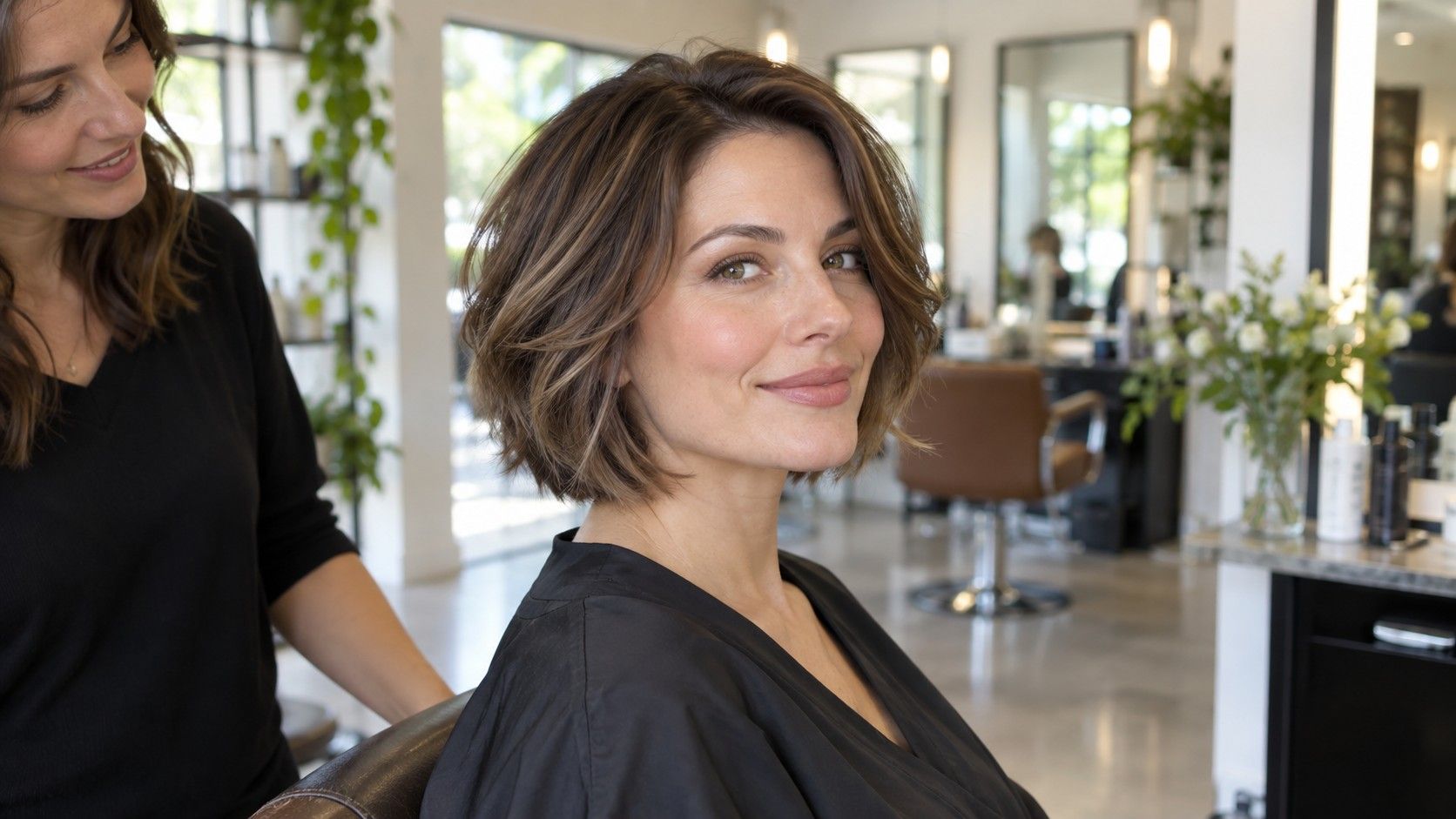
A bob at the jawline can make that area a feature. It works especially well when the line is clean and the ends are healthy, but it needs a plan if your hair naturally flicks outward. A slightly longer bob that reaches between the chin and collarbone is easier for many routines because it can be tucked behind an ear, pinned back, or bent with a straightener. Ask to see the line with your head tilted down; that is when an apparently perfect length often reveals whether it will hit the shoulders and kick out.
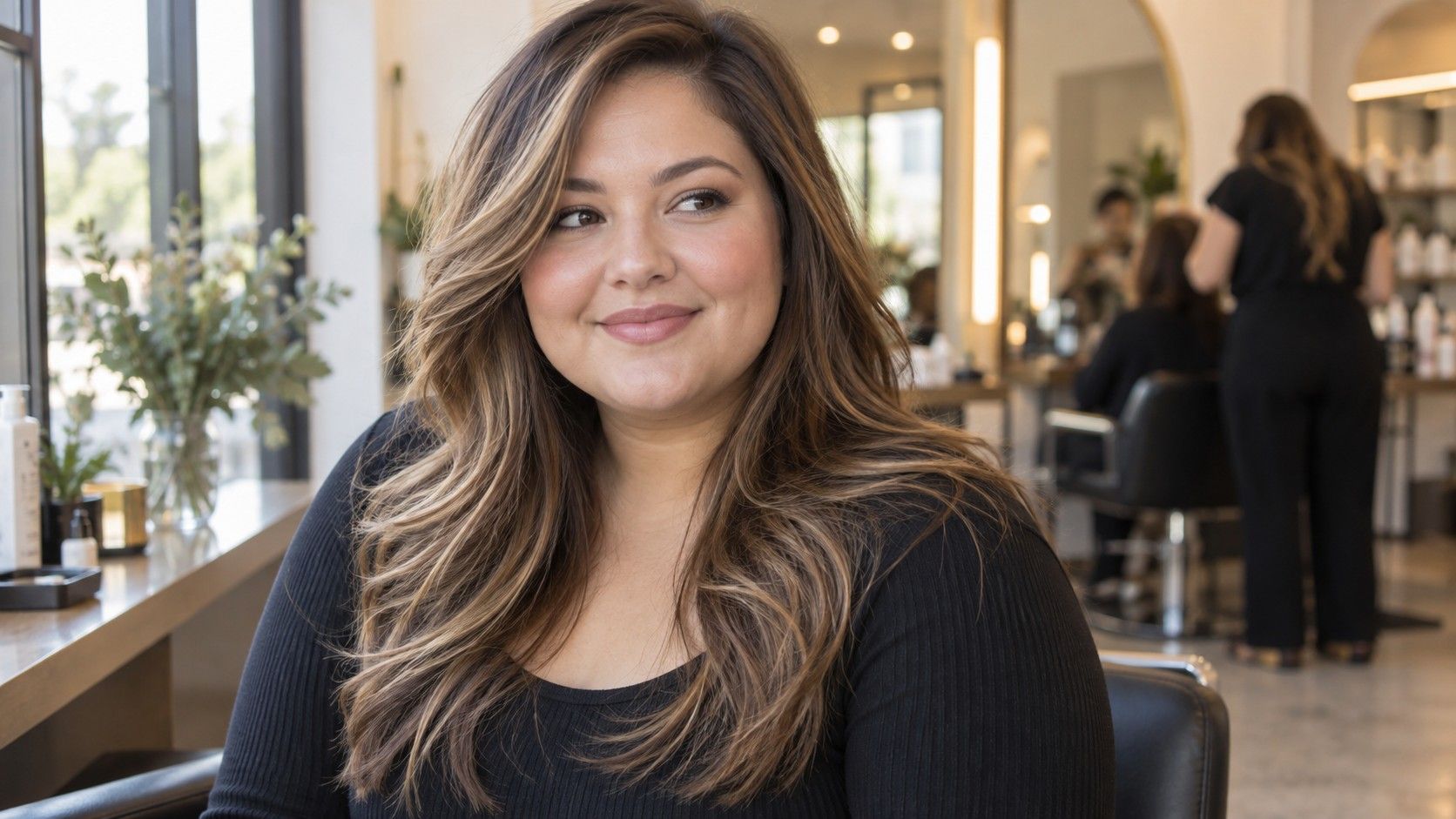
Long hair gives more room for soft layers and can feel balanced without much daily work, but uncut length can become visually heavy. If your hair has medium or high density, request movement through the mid-lengths while preserving a solid perimeter. Fine hair often looks fuller with fewer, longer layers. The aim is not to make every strand look busy. It is to avoid the flat, unplanned curtain that appears when length has grown without a shape.
| Cut direction | When it makes sense | Question to ask before committing |
|---|---|---|
| Blunt bob | You like a defined jawline and regular trims | Will the ends turn out when they meet my neck or shoulders? |
| Long layered cut | You want movement but still wear ponytails | How will the shortest layer behave when air-dried? |
| Textured mid-length cut | You have waves or want a low-pressure shape | Where should I put volume so the sides do not look bulky? |
Bobs, layers and long cuts need different kinds of precision
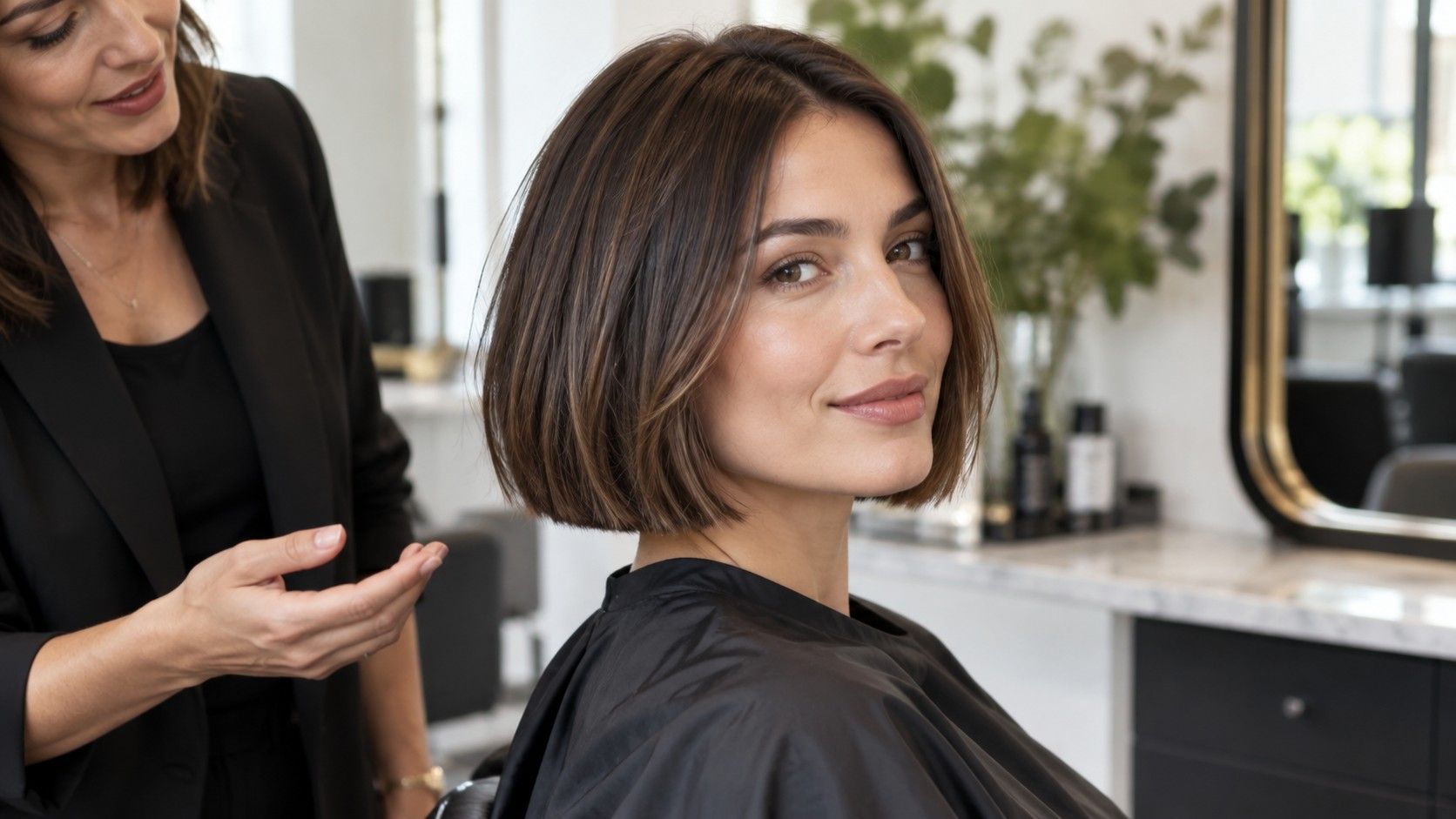
A blunt bob is not merely short hair with a straight line. Its success depends on the weight line, parting, and how quickly the ends lose their polish. With an oval face, a center part can make the look graphic and balanced, while a soft side part gives a more relaxed result. If your hair is thick, ask whether hidden weight removal is needed underneath; obvious thinning can leave the ends stringy, but a careful internal adjustment may stop the shape from expanding at the sides.
Soft layers are less about making hair look like a cascade and more about giving it places to move. Around the front, layers can start near the cheekbones, lips, or chin depending on where you prefer attention. Through the back, they should follow the natural bend of your hair rather than forcing a shape that only appears with a large round brush. A useful test is whether the cut still has a recognizable outline when you let it dry halfway and finish it with your hands.
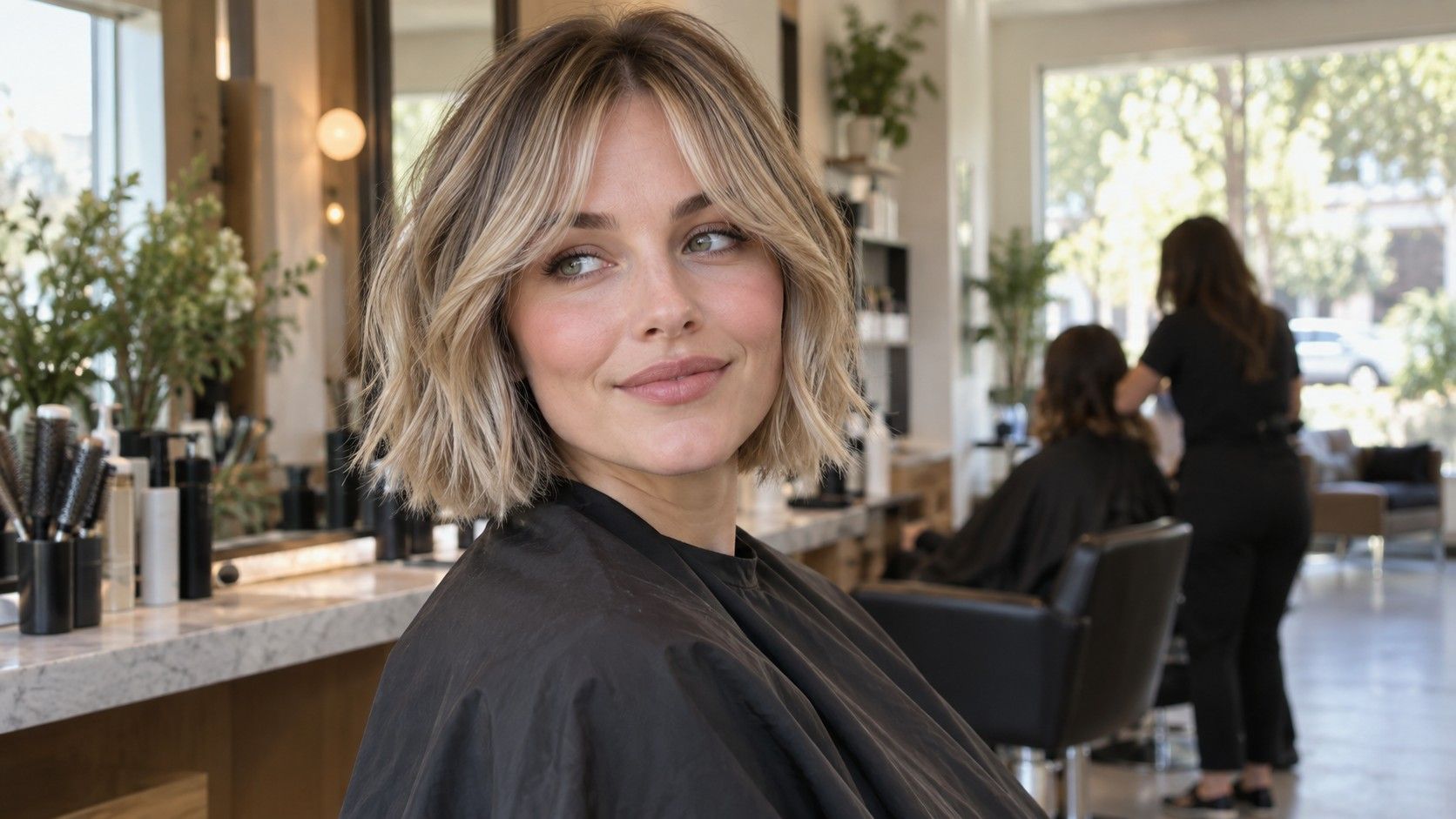
An oval face can carry many fringe shapes, from a short textured crop to a full brow-skimming line, but maintenance is the deciding factor. A full fringe focuses attention on the eyes and can make a simple long cut feel intentional. Curtain bangs are easier to blend into layers and more forgiving when a trim appointment slips. A longer side fringe adds asymmetry without demanding that you style every strand into place. There is no prize for choosing the most dramatic option if it does not fit your weekday routine.
Tell the stylist about cowlicks, glasses, gym sessions, and whether you use a blow-dryer. A fringe that sits neatly in the salon may divide after ten minutes in humid air if it fights a strong growth pattern. Ask for the fringe to be checked dry, then ask how it will look after two and six weeks. The answer matters because a short fringe changes rapidly, while a longer one can usually be directed into the rest of the haircut.
Let your texture determine the styling plan
For straight hair, a center part, smooth finish, and a small bend at the ends can make a simple cut look polished. The key is to preserve some root lift so the hair does not cling to the head. For wavy hair, encouraging the natural pattern usually looks better than brushing it into identical curls. Apply product while the hair is damp, scrunch lightly, and leave the face pieces a little looser so they do not form two matching spirals beside the cheeks.
Curly hair needs a separate conversation about shrinkage and dry cutting. The visible length may sit several inches higher than the wet length suggests, and layers that look modest when stretched can become very round once the curl is released. Bring a photo of your hair on a normal wash day. For styles for oval faces, that evidence is more useful than a generic celebrity reference because it lets the stylist place volume around your actual curl pattern.
Keep the balance as the haircut grows
The most wearable haircut is one with a growth plan. Ask whether the shape is designed for six weeks, ten weeks, or longer, and decide whether that schedule is acceptable before cutting. A precise bob may need frequent perimeter trims; long layers can last longer but may need a small refresh around the front. If you change your part often, mention it, because a cut shaped around one deep side part can look unbalanced when pushed to the other side.
At home, take a quick photo from the front and profile once the cut has settled for a week. Notice whether the jawline, fringe, and crown are behaving as expected. That gives you useful language for the next appointment: perhaps you want the front pieces longer, less weight at the nape, or more definition through the ends. An oval face gives room to experiment, and the most satisfying experiment is one guided by those small, practical observations rather than a rigid rule.