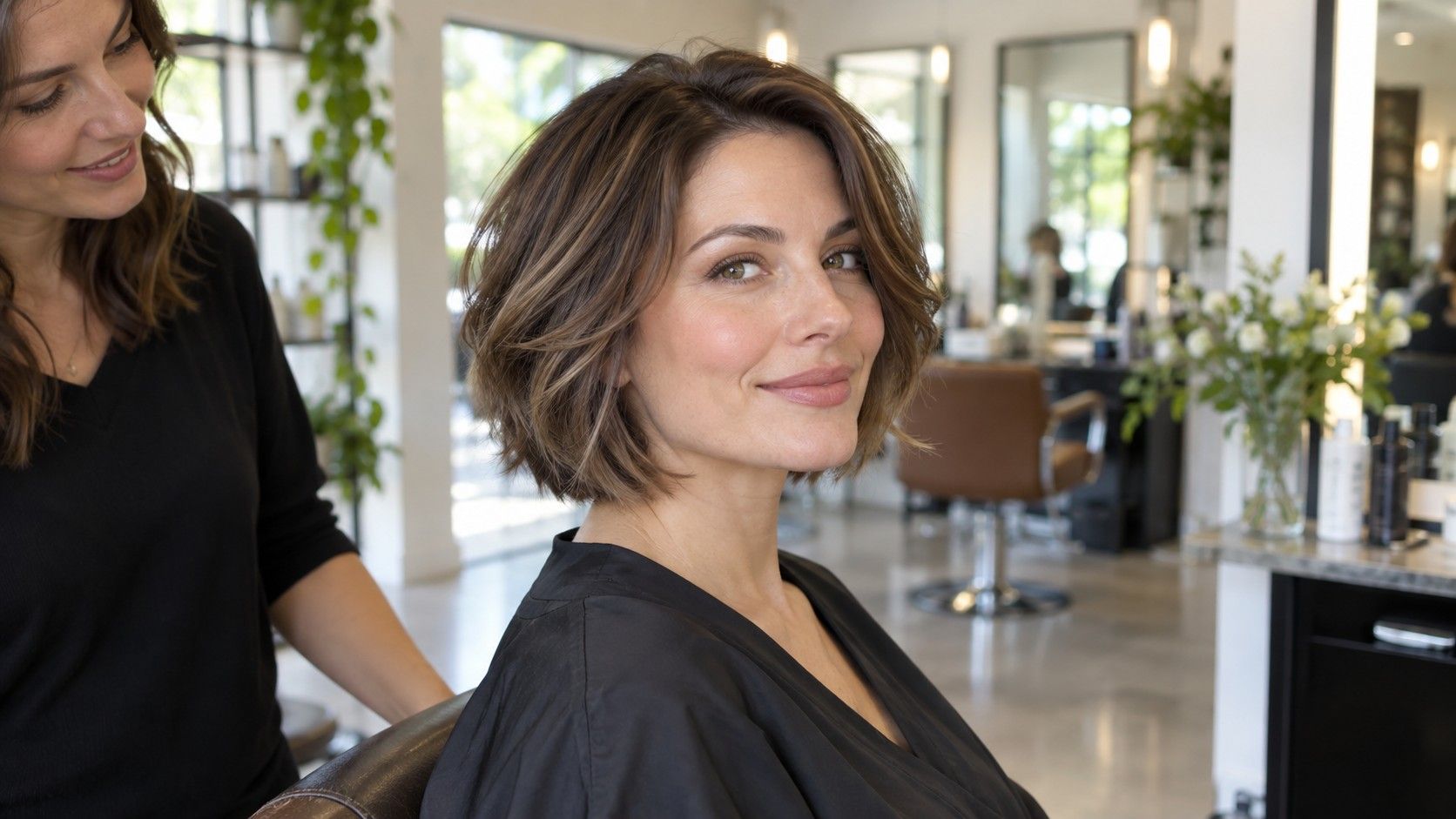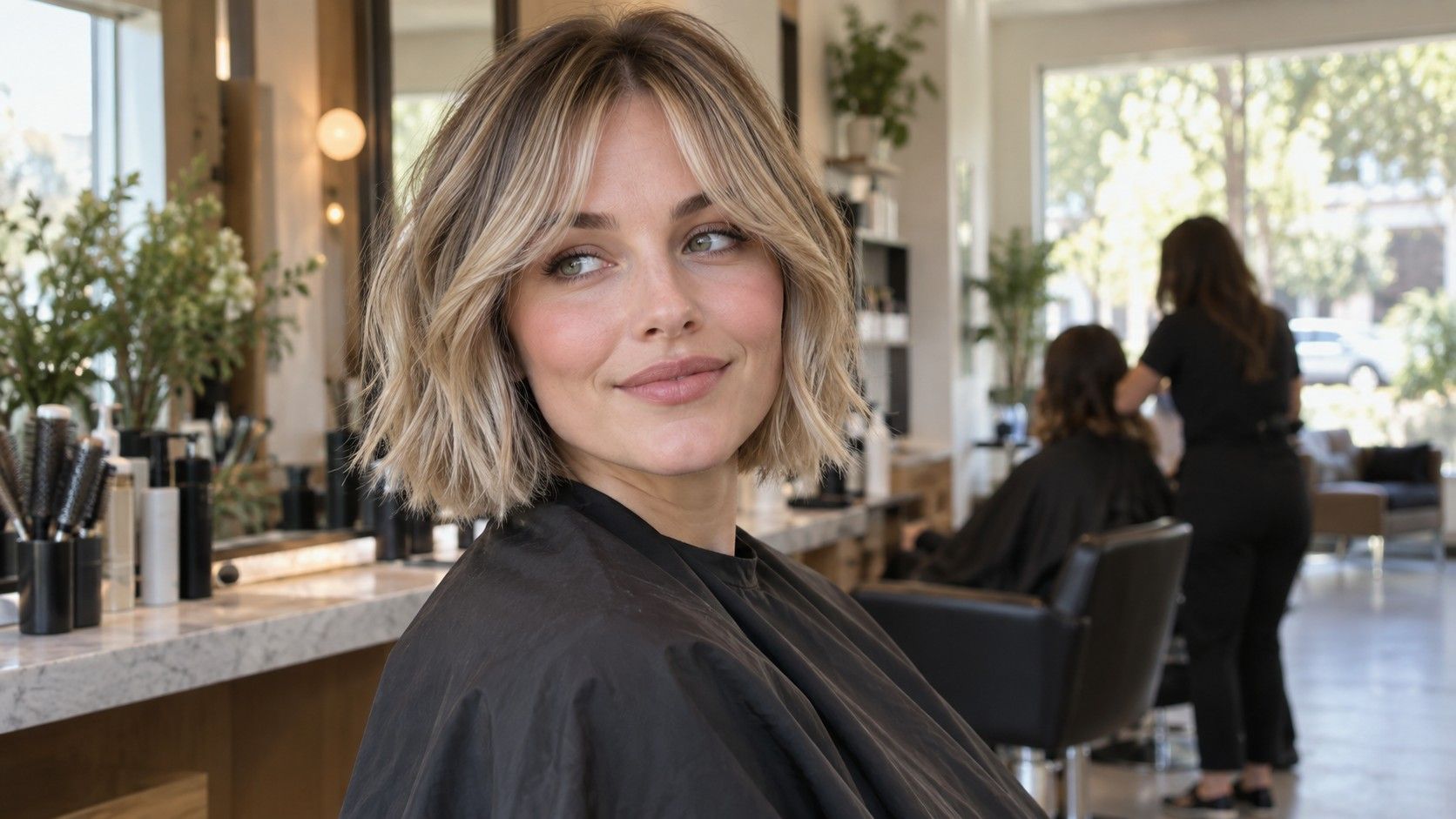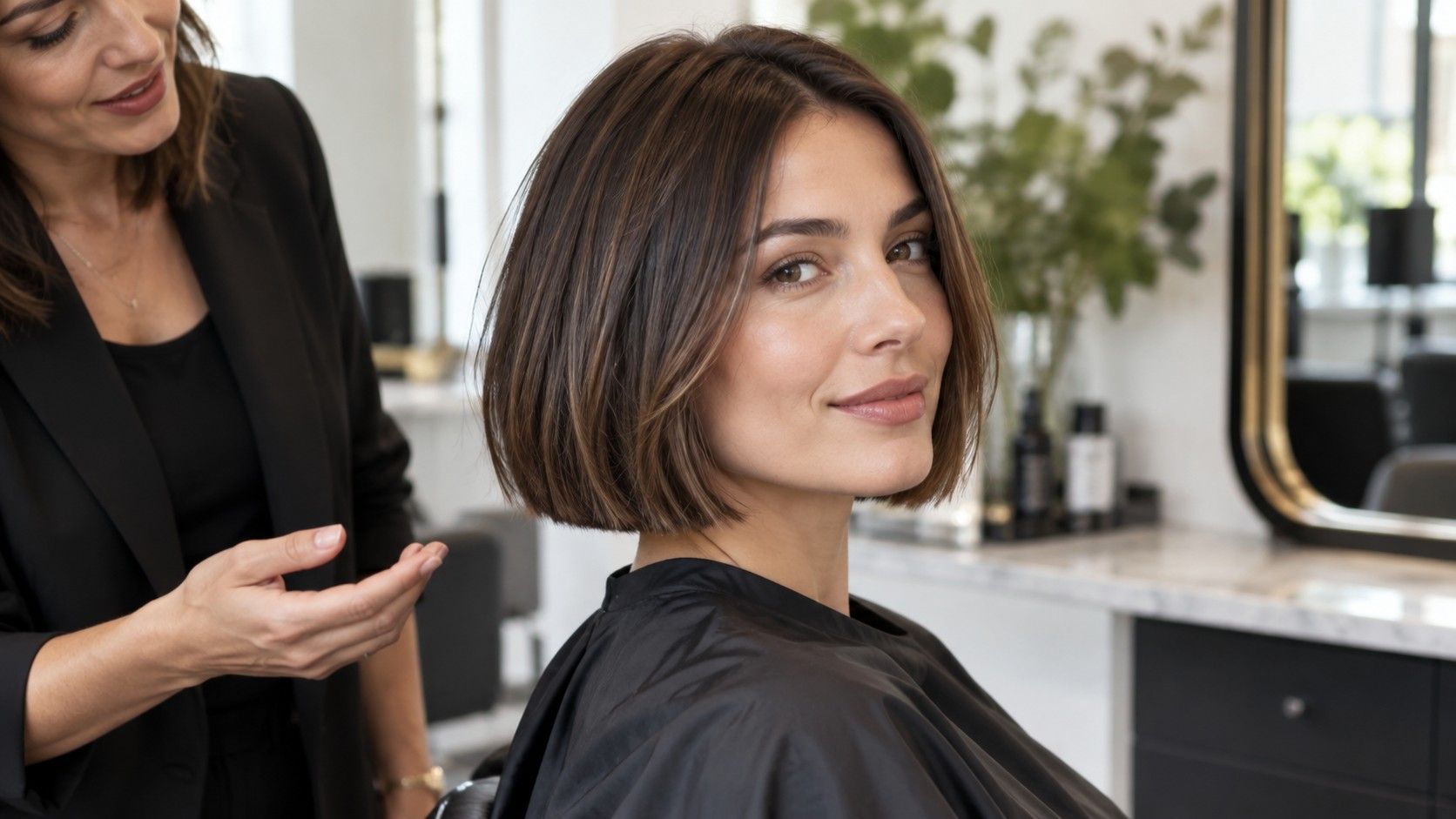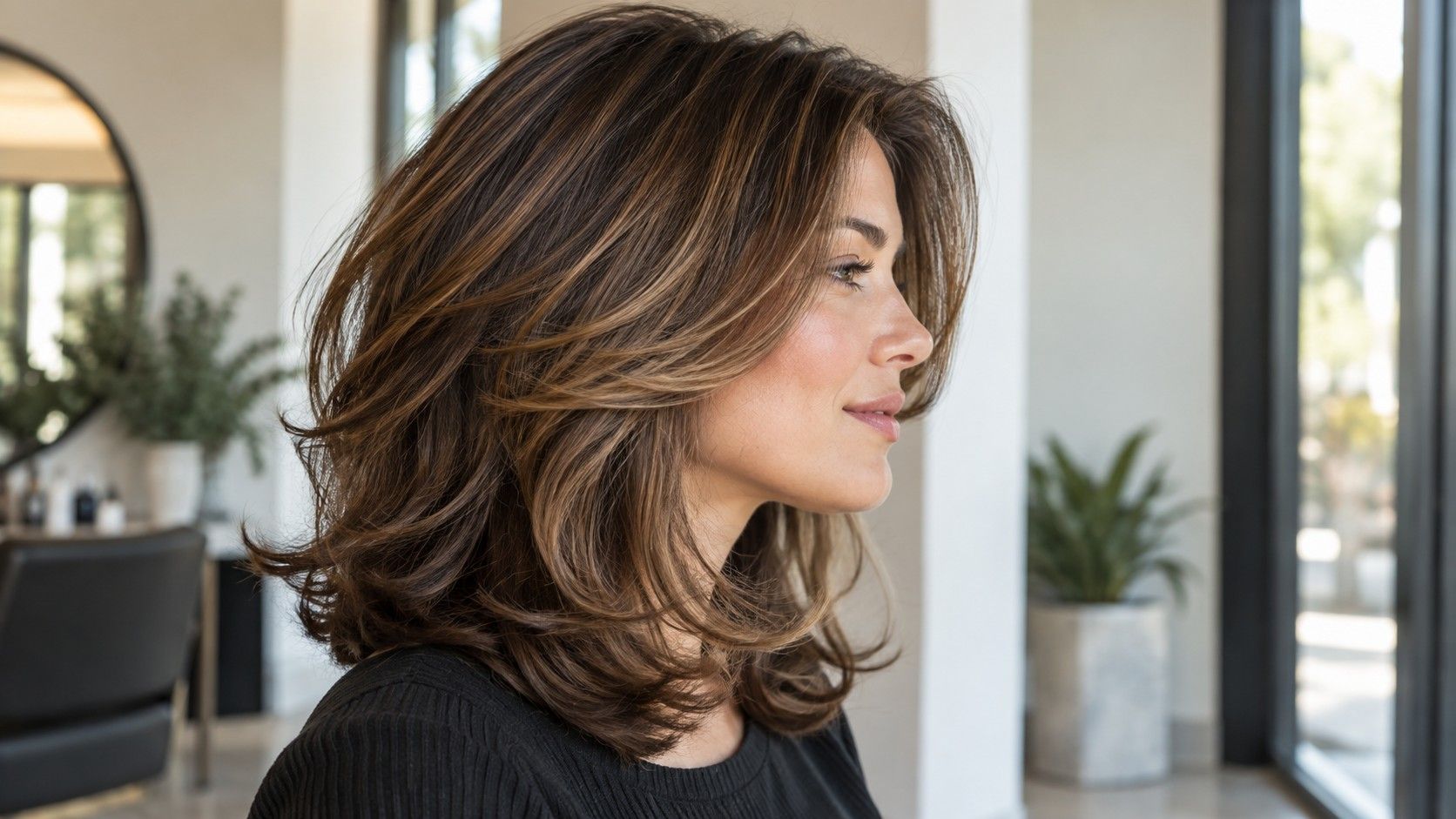
Thick hair has the useful problem of abundance: there is enough density to make a cut look substantial, but enough weight to turn a medium length into a broad triangle if the shape is ignored. Medium length hairstyles for thick hair work when the bulk is distributed instead of merely removed. The aim is movement at the right places, a perimeter that still feels present, and a style that survives humidity and an ordinary wash day.
Decide where your hair becomes widest
Look at your hair when it has dried without much intervention. Some thick hair expands at the sides of the head, some builds weight at the ends, and some stays compact until humidity arrives. This tells a stylist where the cut needs space and where it needs support. A blunt shoulder-length line can be striking, but on very dense hair it may push all the volume outward at one level.
Internal layers remove weight without emptying the ends
The familiar triangle effect happens when the roots lie close to the head while the middle and perimeter expand. It is not a sign that thick hair needs to be attacked with thinning shears. Often the answer is a better internal structure: a little lift at the crown, long layers that release the middle, and enough density at the ends that the haircut does not fray into separate pieces.
Long layers keep medium hair moving
Internal layers are hidden shorter sections that take pressure out of dense hair while leaving the visible surface and perimeter largely intact. They can make a medium cut dry faster and swing more easily, but placement is everything. If they are cut too high or too aggressively, the top layer can puff while the bottom becomes thin, which creates another version of the same triangle.
Ask where the internal weight removal will sit and whether it is being used to solve bulk at the nape, through the sides, or under a dense surface layer. The answer should be specific. Thick hair does not need the same approach everywhere. Curly or wavy hair usually needs more restraint because each shorter layer can expand; smooth, heavy hair may benefit from more release through the interior.
Long layers are a dependable starting point for haircuts for thick medium hair because they preserve a visible length while taking the blocky feeling out of the middle. For a cut between collarbone and chest length, layers that start below the jaw tend to keep the face frame soft without building width around the ears. The longest pieces should still have enough weight to hang cleanly.
A face frame can be useful, but it should connect to the rest of the haircut. Short disconnected pieces look good in a posed photo and then disappear into dense hair once you move. Ask to see the cut from the side after it has been dried naturally. If the front layers jump outward while the back hangs heavy, the balance needs adjusting before the appointment ends.
Keep the perimeter deliberate
A medium-length perimeter does not have to be perfectly blunt, yet it needs a clear destination. A soft U-shape keeps length in the center and removes some side heaviness; a gentle rounded line can make thick hair feel less severe. Deep V shapes can work on long, straight hair but may make wavy dense hair look narrower and stringier at the bottom than it really is.
Be careful with the request for lots of texture. On thick hair, texture can mean healthy movement, or it can mean thousands of short ends that swell in damp weather. A polished result usually comes from fewer, longer decisions. The cut should have a readable shape even before a stylist adds waves, because styling cannot reliably correct a perimeter that was emptied too much.
Style wash day around your drying habits
Air drying is easiest when the cut has been designed for it. Apply a light leave-in product through soaking-wet middle lengths and ends, then avoid repeatedly touching the hair while it dries. With waves, gentle twisting of a few larger sections can encourage a more coherent pattern than scrunching every piece. With straight hair, directing the roots while drying can prevent the crown from going flat under the weight.
If you blow-dry, divide the hair into workable sections rather than fighting all of it at once. Dry the roots first, then smooth the middle lengths with tension, leaving a little bend at the ends if that suits the cut. In humidity, a small amount of flexible finishing cream on the outer layer is often enough. Heavy oils can make dense hair separate into ropes and make the overall shape look less intentional.
Plan for the grow-out before you commit
| Medium cut | Best use | Grow-out consideration |
|---|---|---|
| Long layers with U-shaped perimeter | Dense straight or loose-wavy hair | Maintains a clear outline as it gets longer |
| Soft shag with extended layers | Natural wave and moderate bulk | Needs careful layer placement near the crown |
| Collarbone lob with internal release | Hair that feels heavy at the nape | Requires a regular check on the perimeter |
| Rounded medium cut | Thick hair that expands at the sides | May need reshaping when humidity changes |
Give your stylist the details that change the cut
Describe how long your hair takes to dry, whether you tie it back, and where it becomes difficult to manage. Mention if one side is denser, if the nape grows upward, or if humidity changes the texture completely. These are not minor complaints; they are the map for where layers and weight removal belong. Bring reference photos with a similar density, not only a similar color or face shape.
The strongest medium hairstyles for thick hair feel lighter without looking as though hair has been taken away at random. You should be able to wash it, let it dry in a familiar way, and still recognize the design. A good cut makes bulk easier to direct, protects the perimeter, and gives you enough movement that medium length feels deliberate rather than like a pause between two other haircuts. Give the cut two home wash cycles before judging it, because dense hair often settles differently once the salon finish has disappeared.