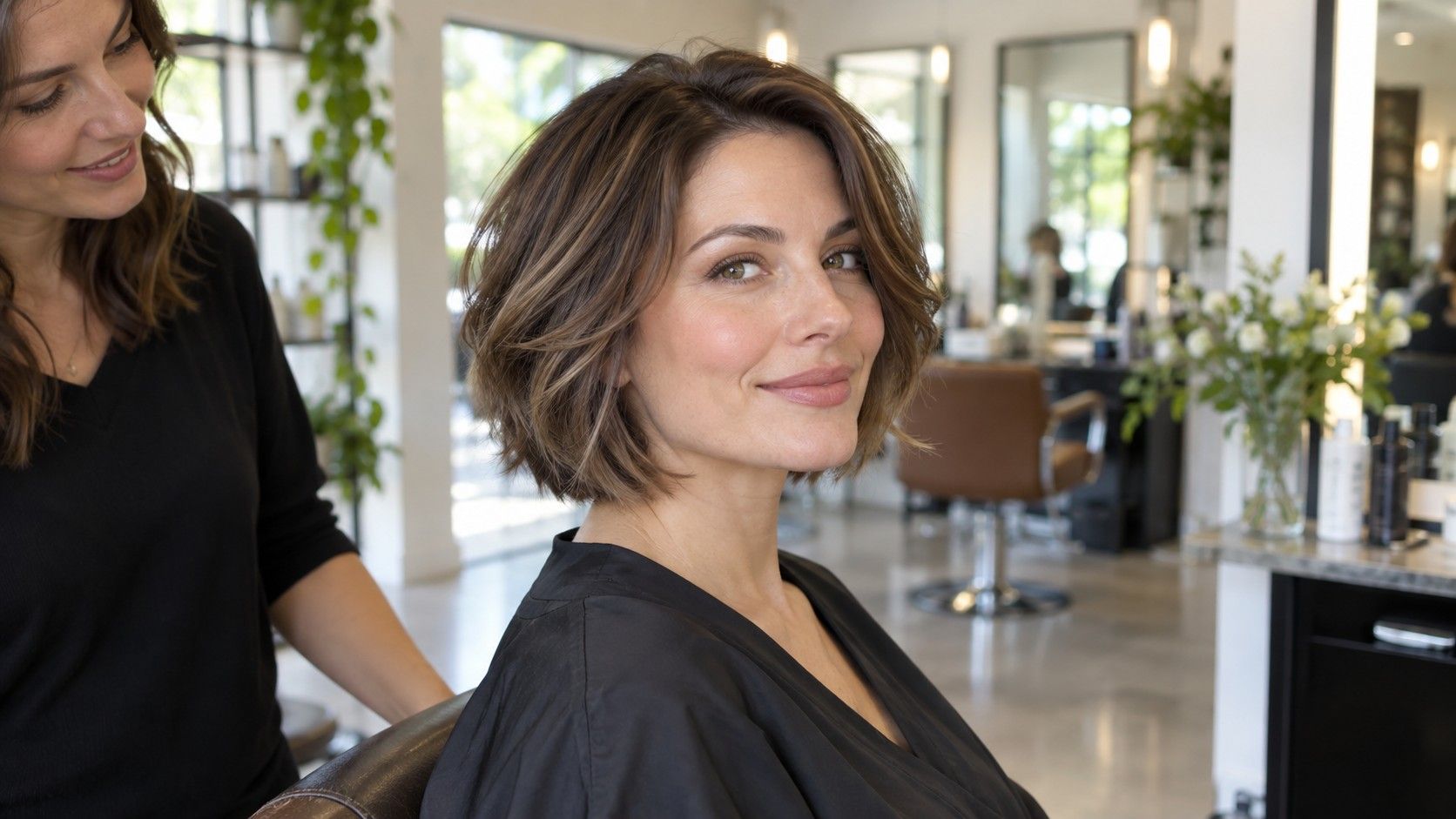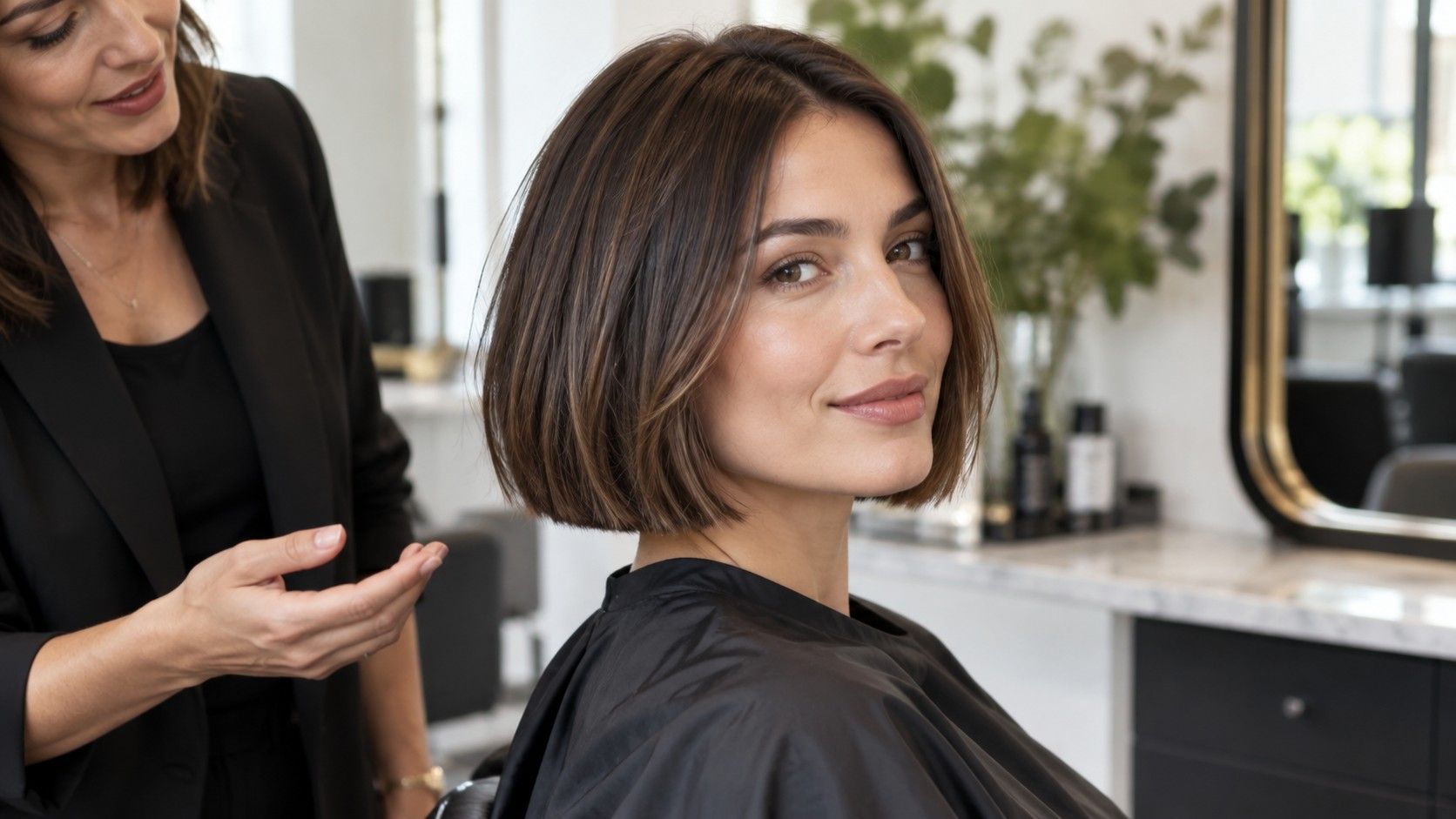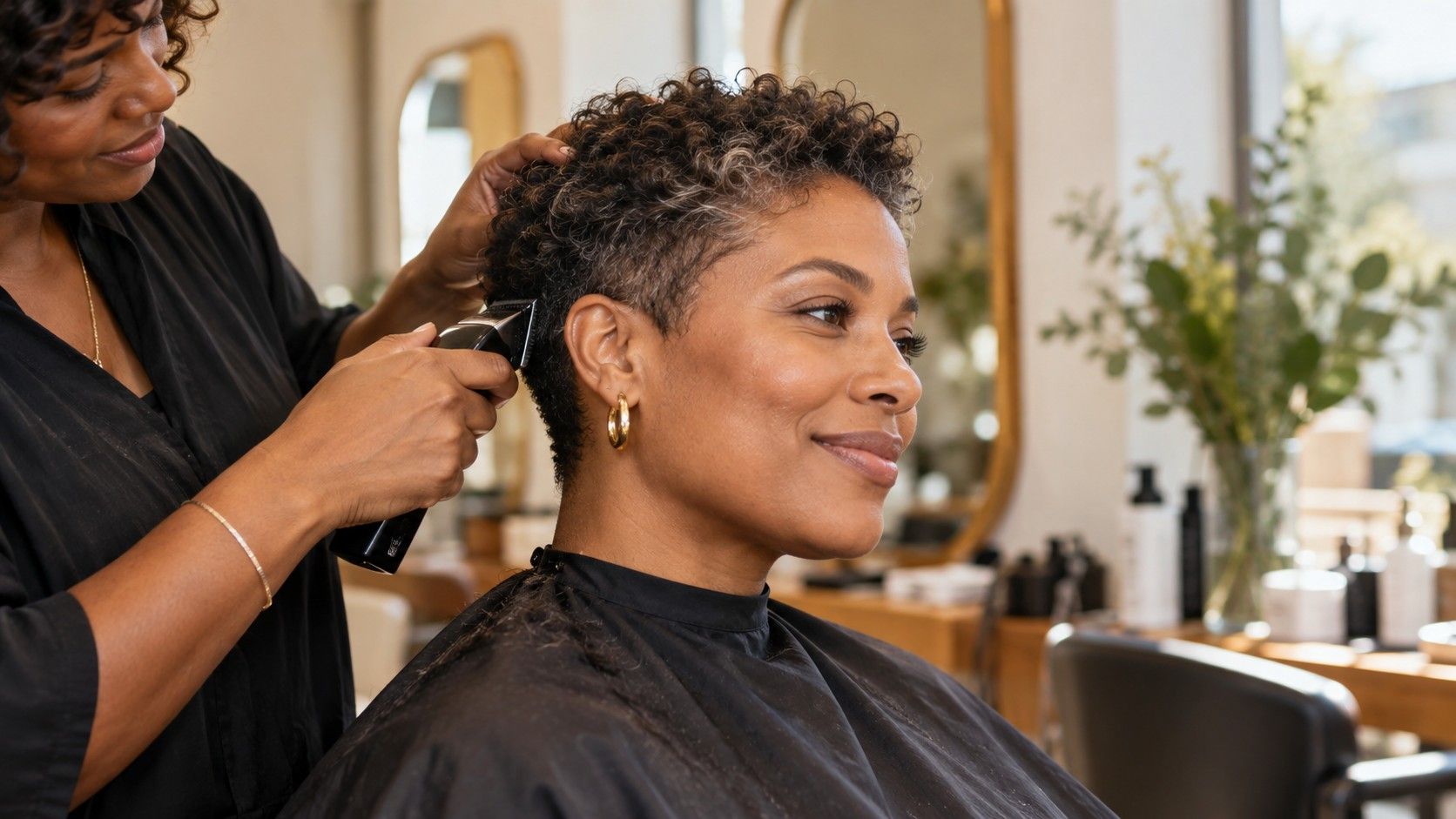
A short cut can save time, but it does not automatically become an easy short hairstyle. The difference is usually in the shape: whether it works with the way your hair dries, whether a cowlick has somewhere to go, and whether the outline stays deliberate after week six. A good low-maintenance cut should look like a choice on an ordinary Tuesday, not only after a careful salon finish.
What low maintenance really means for short hair
Low maintenance is not the same as no maintenance. Hair still needs washing, conditioning, and an occasional trim. In practical terms, it means you can shower, rough-dry or air dry, use a little product if you want it, and leave the house without trying to recreate a salon blowout. It also means a missed appointment does not turn the back of the head into a problem by the following week.
Short haircuts that grow out well
The most useful question is not whether a cut is fashionable, but what it asks of you at 7:30 in the morning. If your fringe splits in two because of a strong front cowlick, a heavy blunt fringe will need attention every day. If your hair is fine and goes flat at the crown, an ultra-sleek bowl shape may ask for more heat styling than its photos suggest. A cut that follows the grain of your hair usually costs less time than one that fights it.
The air-drying test is more honest than the mirror at the salon
Before booking, notice where your hair changes direction when it is clean and dry. Check the nape, both temples, the crown, and the front hairline. These small areas decide whether a short haircut settles into place or starts producing odd wings. A stylist can work around them with a softer perimeter, a slightly longer crown, or less weight in one stubborn corner.
A soft pixie is often the most forgiving option when it is built with length at the crown and a tapered, not shaved, nape. The longer top can be brushed forward, pushed to one side, or left a little undone as it grows. The cut changes character over eight to ten weeks rather than collapsing all at once. Very tight clipper work looks sharp at first, but it announces its grow-out quickly and usually needs a shorter trim interval.
A French bob with a relaxed edge is another reliable choice. It sits around the jaw or just above it, so a few extra millimetres do not change the proportion overnight. The trick is avoiding a perfectly rigid line if your ends naturally bend in different directions. A lightly textured baseline lets the hair move and makes a bend behind one ear look intentional rather than unfinished.
A textured crop works well for people who like separation and do not need every strand to match. It has short sides, but not necessarily skin-close sides, with enough length on top to break up the outline. When it grows, it becomes a compact layered shape instead of a helmet. The least forgiving version is a crop cut into hard geometric corners; those corners are what disappear first.
| Cut | Why it grows out gently | Typical trim rhythm | Morning effort |
|---|---|---|---|
| Soft pixie | Length at the crown can change direction | 6 to 9 weeks | Finger-dry with a small amount of cream |
| Relaxed French bob | A soft baseline hides uneven natural movement | 8 to 12 weeks | Air dry or quick bend at the ends |
| Textured crop | Piecey shape is less dependent on a crisp outline | 6 to 8 weeks | Work a matte paste through dry hair |
| Long pixie bob | Extra length gives the cut a transition stage | 8 to 10 weeks | Part it differently when the crown gets longer |
Let your texture make the decision
Straight, dense hair shows every blunt edge. That can be beautiful, but it also means the neckline and the line around the ears need regular attention. Asking for internal movement without thinning the ends too aggressively helps a dense bob move while preserving enough weight to sit cleanly. If the hair is naturally very straight, a few soft layers around the face often give more useful flexibility than lots of short layers everywhere.
Fine hair usually benefits from a shape with a solid-looking perimeter. The aim is not artificial volume; it is avoiding ends that look transparent by lunchtime. A jaw-length bob, a compact pixie, or a short cut with a longer fringe can all work, provided the layers are subtle. Too much point cutting through fine hair can make styling harder because there is less structure for the hair to hold.
Wavy hair often gives you the easiest route to low maintenance, as long as the cut leaves room for the wave to form. A textured crop or rounded short bob can air dry beautifully when the layers are placed to release movement rather than to remove it. The common mistake is cutting wavy hair wet into a precise line and discovering later that each wave springs to a different height. Discuss the dry shape, not only the wet length.
When discussing low maintenance short haircuts, ask to see how the hair behaves with minimal finish. It does not have to be left completely untouched, but the stylist should be able to explain what one quick step at home will do. A little mousse at the roots, a pea-sized styling cream, or a few minutes with a dryer is realistic. A round brush, section clips, and fifteen minutes of heat every morning are a different arrangement.
Air drying depends on the cut being balanced at the crown and nape. If the crown is cut too short, it can stand up before it settles. If the nape is too heavy, it can flip out against collars. Neither issue means your hair is difficult; both are useful information for the next cut. Take a quick photo on the second or third wash day and show it at your appointment. It is more helpful than trying to describe a rogue piece of hair from memory.
Product should support the hair rather than freeze it into a borrowed shape. Cream is useful for soft pixies and bobs that need a little polish. A light mousse can help fine hair hold some lift at the root. Paste or clay suits a crop when you want separation. Start with less than you think you need; short hair makes excess product visible quickly, especially near the fringe.
Why necklines and fringes set the maintenance schedule
The neckline is the quiet cost of a short cut. A tapered nape grows softly because there is no sharp horizontal edge to protect. A squared or heavily undercut neckline can look excellent, but it becomes obvious sooner and may need a clean-up between full appointments. If you want to stretch visits, choose a neckline that fades into the hair rather than stopping abruptly.
Fringes deserve the same honesty. A long side fringe can be tucked behind an ear while it grows. A wispy fringe can become face-framing pieces. A short, dense fringe has fewer escape routes and may need a fringe trim every three or four weeks. This is not a reason to avoid it; it is simply worth treating as part of the haircut plan rather than an afterthought.
At home, protect the shape by detangling gently, using heat protection when you do blow-dry, and not trying to trim the perimeter yourself after one irritating morning. If one area repeatedly kicks out, change the part or dry that section in the opposite direction for thirty seconds. Small adjustments tend to solve more than dramatic ones.
How to ask for a cut you can live with
Bring photos for mood, then explain your routine in plain terms: how often you wash, whether you use a dryer, how much time you have, and what your hair does without styling. Mention the point at which previous short haircuts stopped looking good. Was it the fringe? The bulky sides? The nape? This gives the stylist a usable problem to solve.
Ask where the shape will be in six and ten weeks, not only how it will look when you stand up from the chair. A thoughtful answer should include a likely trim interval and a simple way to restyle it as the length changes. The best short haircuts that grow out well are not frozen designs. They are built with a second and third version already in mind.