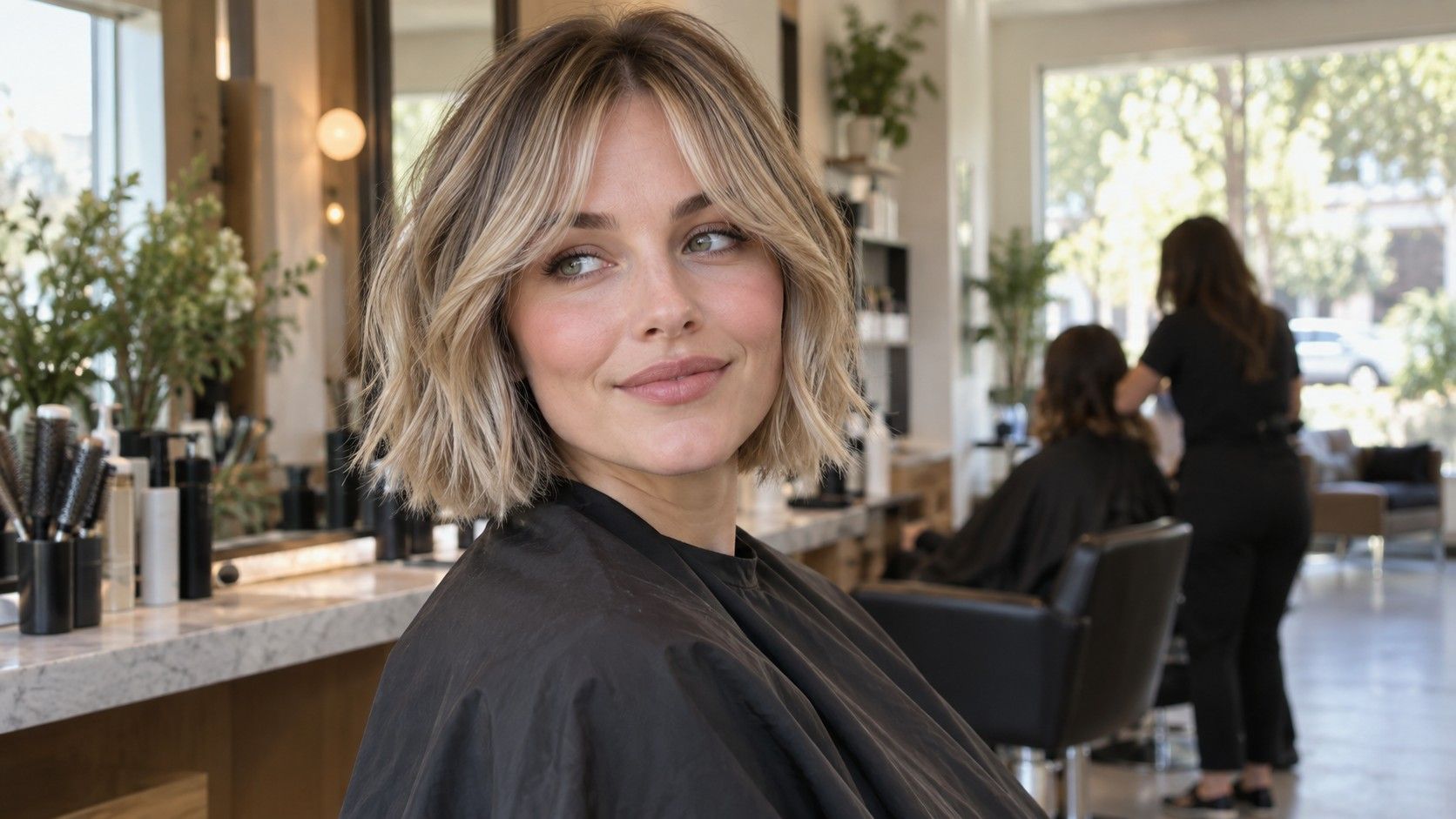
Curtain bangs with long hair look relaxed because they are designed to move, not sit in one rigid strip across the forehead. That does not make them effortless. They are a small daily styling job, and their success depends on hairline direction, how quickly the front gets oily, and whether the length is cut to connect with the rest of the hair.
Who will enjoy curtain bangs in everyday life?
Curtain bangs suit people who like some softness around the face and do not mind spending a few minutes refreshing the front. They are more flexible than a blunt fringe because they can open at the center, sweep to either side, and blend into face-framing layers. On a day when you want your hair off your face, they can be pinned back or tucked behind the ears without looking like an emergency fix.
Choosing the length and the opening
They are less convenient if you hate using a dryer, wear a hat or helmet most days, or have a strong cowlick at the front that pushes the hair in the opposite direction. None of these factors makes bangs impossible. They simply change the design. A longer starting length, a wider separation, or a side-biased part can work better than copying a close, symmetrical fringe from a photo.
Cowlicks, humidity, and oily roots
Consider your wash schedule too. The short front pieces touch the forehead and pick up oil faster than the rest of long hair. Many people do not need to wash the whole head more often, but they do rinse or restyle the bangs between wash days. If that feels like an annoyance rather than a small ritual, longer face-framing layers may give a similar effect with fewer demands.
The shortest point of curtain bangs determines how committed the look feels. Cheekbone-length bangs are a gentle entry point: they still frame the face but can disappear into a side part. Bangs that begin around the bridge of the nose or upper cheek create a more obvious curtain shape and usually need more deliberate drying. A very short center section can be striking, yet it leaves less room for a late morning when the hair will not cooperate.
The opening should match your natural part. If your hair naturally divides a little off-center, forcing a ruler-straight middle opening can make both sides spring apart unevenly. Ask your stylist to observe the front when it is damp and again when it is dry. The goal is not mirror-image precision; it is an opening that returns to the same place after you wash your hair at home.
Long hair curtain bangs should blend rather than stop. The outer corners need a gradual connection into the longer face-framing pieces, particularly if you wear your hair up. A disconnected corner can look fine with a blowout but becomes a short, loose section in a ponytail. A soft transition gives you more ways to wear the hair and makes the grow-out much calmer.
| Bang choice | Best for | Daily reality |
|---|---|---|
| Long cheekbone curtain | First-time bangs and easy grow-out | Can often be tucked away on low-effort days |
| Nose-length center pieces | A visible middle-part shape | Needs directed drying to keep the opening |
| Wide, soft curtain | Thicker hair and larger natural movement | More forgiving when it separates during the day |
| Side-biased curtain | A strong cowlick or habitual side part | Less symmetrical, often easier to manage |
How to style curtain bangs in under ten minutes
The fastest method starts while the bangs are damp. Separate the fringe from the rest of the hair, then dry it first; leaving it until the end lets it set in whatever direction it chose while you worked on the length. Aim the dryer from above and move the hair from side to side for a moment. This resets a cowlick and prevents the roots from drying flat against the forehead.
Then use a medium round brush or a small roller. Wrap one side away from the face, warm it briefly, and let it cool before brushing it out. Repeat on the other side. The aim is a soft bend at the root and through the middle, not a tight curl at the end. If the ends flip too much, brush them downward for the final few seconds while they cool.
For a lower-effort version, mist only the bangs with water, use the dryer without a brush until the roots are mostly dry, and guide the ends out with your fingers. This will not create a polished blowout, but it restores the direction that matters. A tiny amount of lightweight cream can smooth flyaways; heavy oil near the fringe tends to make it separate into shiny strands.
A cowlick is not a styling failure. It is a growth direction, and short hair at the front makes it visible. The usual mistake is trying to press it straight down. Instead, dry the roots briefly in the opposite direction first, then move them into the part you want. This gives the root a chance to reset before it cools. If one side always opens wider, a slightly asymmetric curtain can look natural and be easier to maintain.
Humidity changes the finish because the front pieces are light and exposed. Hair that is naturally wavy may puff or curl around the temples, while very straight hair may lose its bend. A flexible styling product and a small brush in your bag are more useful than piling on hairspray. The point is to restore a direction, not to make the fringe immovable.
Oily roots are common with bangs because fingers touch them throughout the day. Keep dry shampoo focused on the roots and brush it through rather than leaving a visible powdery patch. If your lengths still look fresh, washing just the bangs at the sink and drying them in two minutes is often more effective than adding more product over yesterday's product.
How curtain bangs work with the rest of long hair
With very long hair, the front needs enough connection to avoid looking pasted on. Face-framing layers give curtain bangs somewhere to travel after the cheekbone, which makes the whole shape feel softer when the hair is down. If you prefer a blunt one-length cut, the bangs can still work, but keep the outermost pieces long and subtle so they do not create an abrupt step.
Think about the styles you wear most. In a low ponytail, curtain bangs leave a soft frame around the face. In a high ponytail, shorter corners may pull out more strongly and need pins or a little heat. A center part shows the full curtain shape; a side part turns it into a sweeping fringe. These are useful options, but only if the cut has enough length at the sides to move between them.
A salon photo often shows long hair freshly curled, which makes every blended piece look seamless. Test the decision against your natural finish. If you mostly air dry straight hair, ask for a shape that still works smooth. If you wear waves, ask how the shortest section will spring up. The best version of the cut is the one that remains flattering after your usual wash and dry routine.
Growing them out without the awkward stage taking over
Curtain bangs are among the easier fringes to grow out because the center can gradually lengthen into face-framing layers. The process is smoother when you keep the outer corners connected and resist trimming the middle too short every time it brushes your eyelashes. A small adjustment to the part can take the front pieces out of your eyes while they gain enough length to tuck back.
Plan a light bang trim every four to six weeks while you want the shape, then tell your stylist clearly when you are switching to grow-out. The cut can be softened into longer layers rather than maintained at the old shortest point. This one sentence matters: a routine fringe trim is designed to preserve the bang, while a grow-out trim is designed to move it forward.
During the transition, a bend away from the face is your friend. It keeps the front from hanging straight into the eyes and makes the added length look deliberate. Clips, a partial tuck, and a looser side part are practical tools, not signs that the haircut has failed. With long hair already present, the bangs have somewhere natural to join.