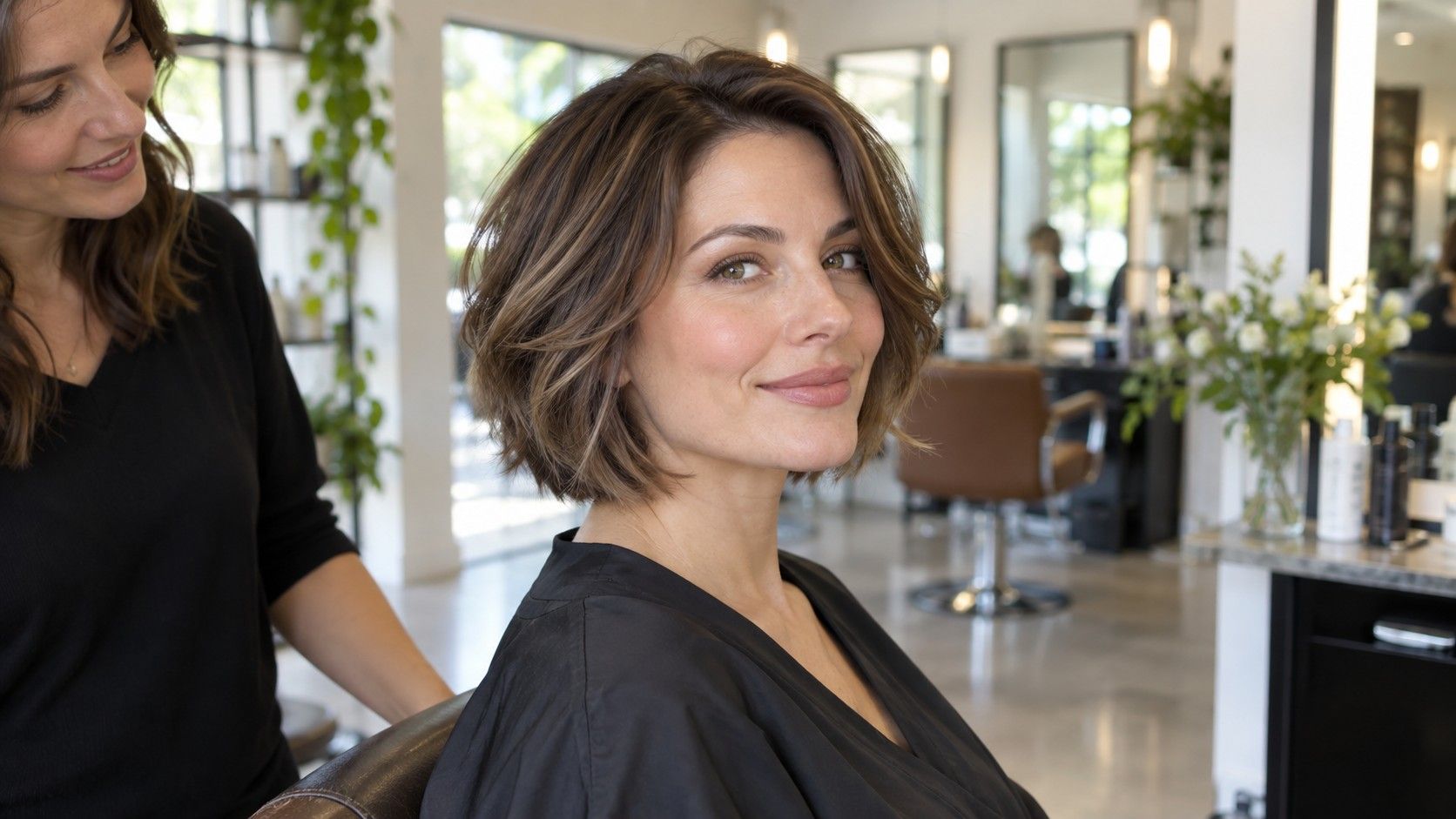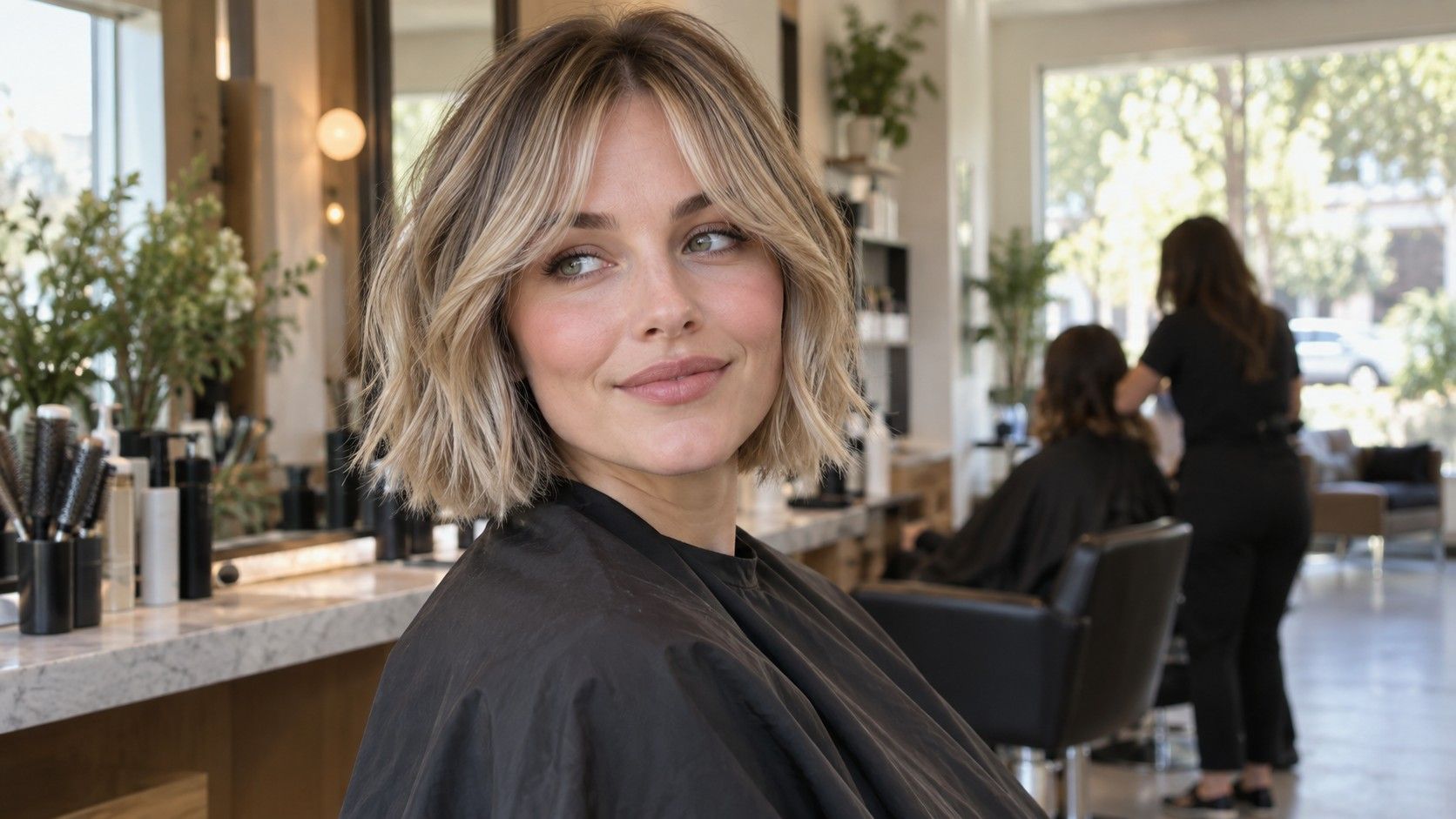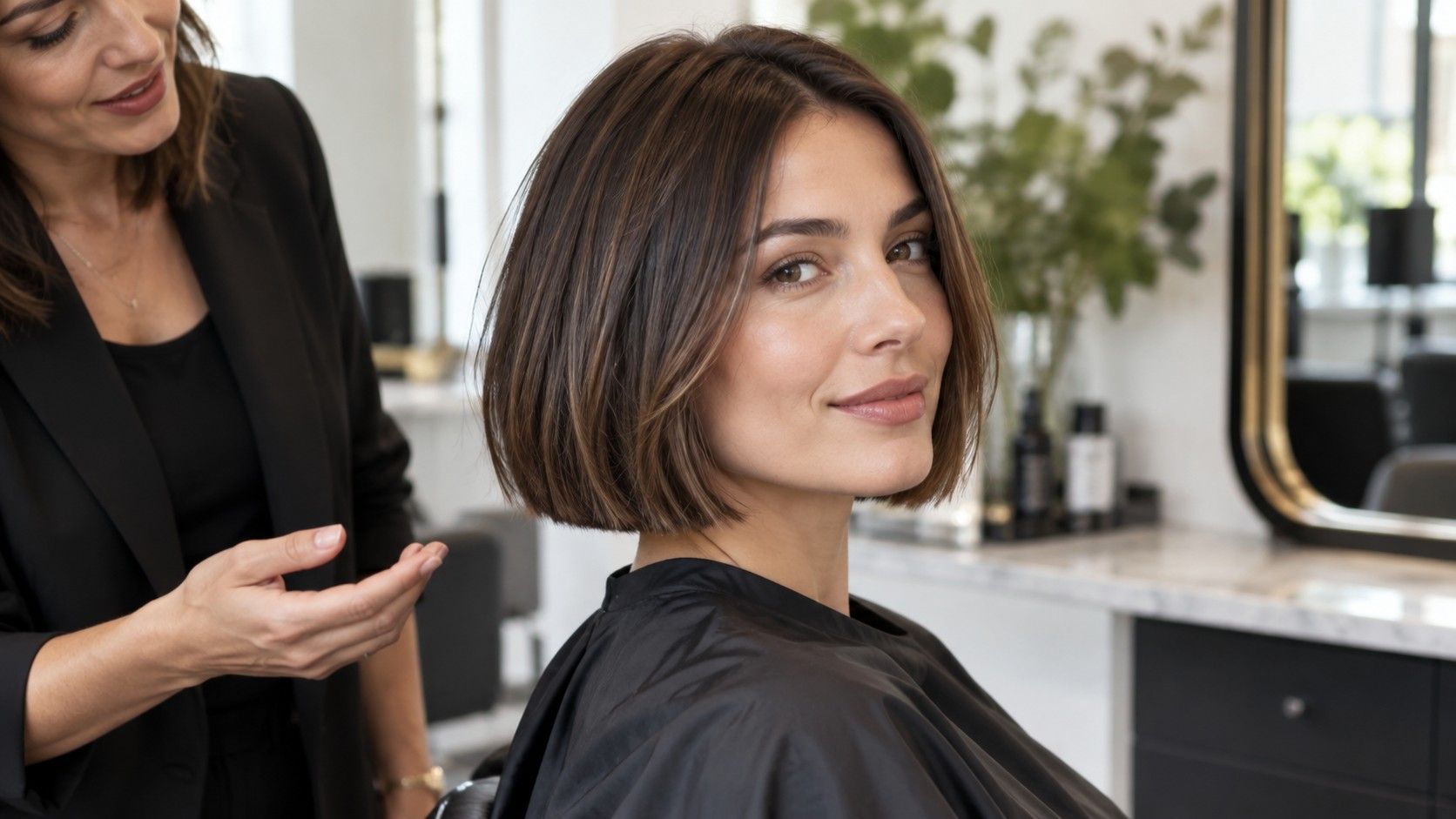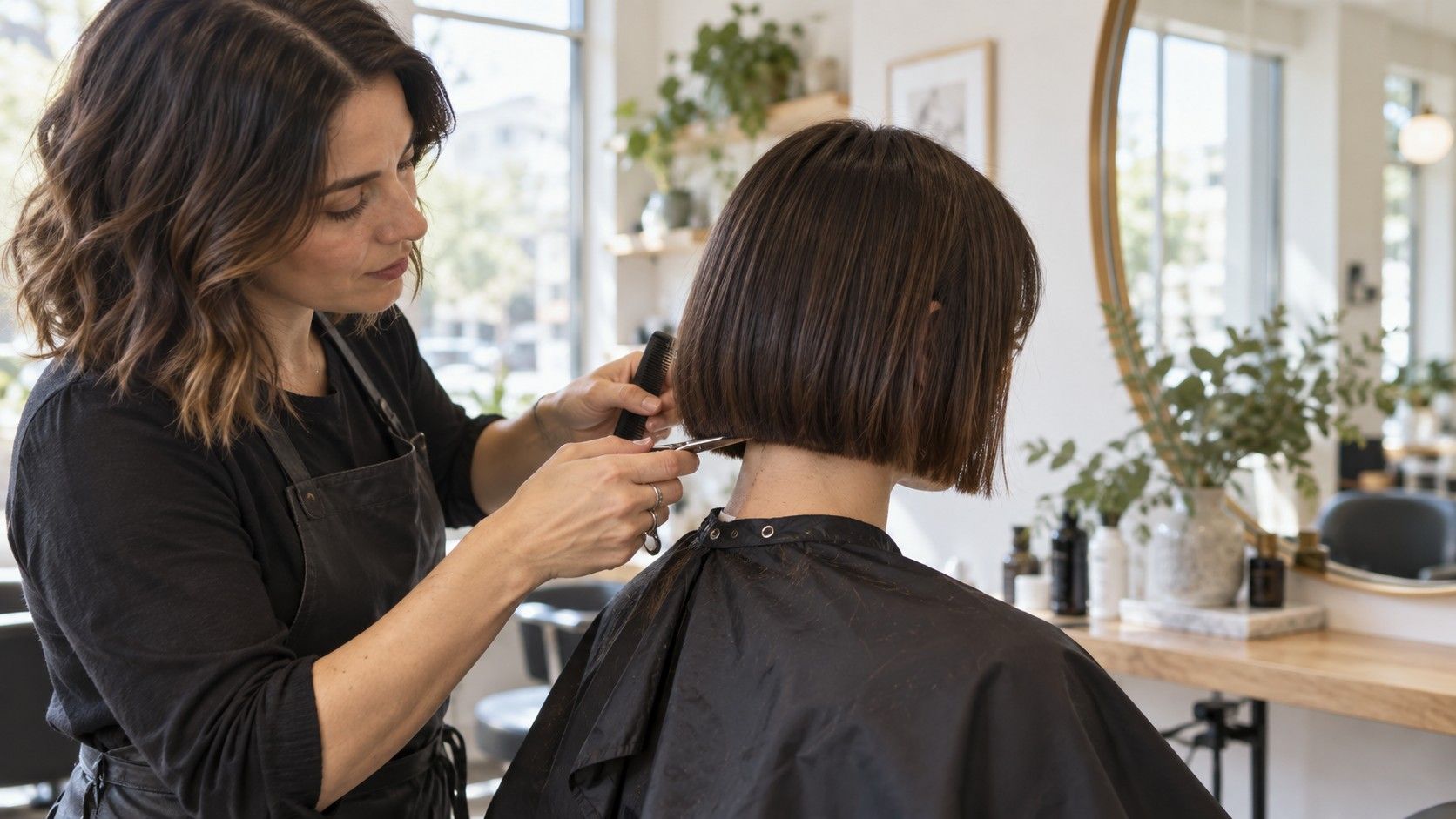
A bob haircut sounds simple until you sit in the chair and discover how many decisions hide inside that one word. A change of two inches can move the visual emphasis from the cheekbones to the jawline, make the nape feel exposed, or turn an easy air-dry cut into a daily blow-dry project. The best bob haircut is not the one from a single reference photo; it is the version whose length, weight and finish still make sense on an ordinary Tuesday morning.
The decisions hidden inside the word bob
A bob is defined more by its outline than by one fixed length. It may stop at the jawline, sit just below the chin, skim the collarbone, or be shorter at the nape and longer toward the face. Before comparing types of bob haircuts, decide which line you want the eye to notice first. A jaw-length perimeter can make a strong jawline look deliberate, while a longer perimeter leaves more space around the lower face and is easier to tuck behind the ears.
French, blunt and long bob differences
Weight matters as much as length. A blunt perimeter keeps fullness at the bottom, which can be helpful on fine hair but can create a triangular silhouette on dense, wavy hair. Graduation removes some weight at the nape and builds a rounded profile. It looks polished when it is cut accurately, yet it also reveals imprecision faster as it grows. Ask yourself whether you like a crisp shape that needs regular upkeep or a softer outline that can stretch a little longer between appointments.
Texture and density change the cut
A French bob is usually short, loose around the mouth or jaw, and often paired with a relaxed fringe. It has movement at the ends rather than a ruler-straight line. That makes it forgiving when styled with a little bend, but it is not automatically low maintenance: a short fringe and a visible nape may both need attention sooner than a longer cut. It works best when the hair has enough natural texture to avoid looking overly round.
A blunt bob has a cleaner, denser edge. On straight or lightly waved hair, the result can look intentionally graphic with very little layering. The trade-off is that every uneven wave and every outward flip is easier to see. A long bob, often called a lob, usually lands between the collarbone and upper chest. It offers more ponytail options and less shock after a major cut, though it can lose its distinct shape if the ends become too thin.
| Bob shape | Usually suits | Watch for |
|---|---|---|
| French bob | Natural bend, soft fringe, a short visible neckline | Frequent fringe and nape clean-up |
| Blunt bob | Fine to medium hair that benefits from a dense edge | Ends that flip or look heavy on thick hair |
| Graduated bob | A rounded profile and lift at the back | A grow-out line that needs timely trims |
| Long bob | First-time bob wearers and people who still tie hair back | Over-layering that makes the outline disappear |
Choosing the length around the face
Bring attention to the points you actually like, rather than chasing a rule about face shape. A bob ending at the widest part of the jaw can make that area more prominent; this can be striking or annoying depending on your goal. If you prefer a softer frame, let the front edge fall below the chin or use a slightly longer front. A side part can add asymmetry and lift, while a center part makes the perimeter read more evenly and exposes the forehead and cheeks.
The nape is the quiet test of a short bob. Fine hair often lies close to the neck there, so a very short back can look elegant but flat without subtle internal support. Thick hair can hold a bulky shelf at the same point if too much is left behind. During the consultation, ask the stylist to show where the back will sit when you look down, turn sideways, and wear a coat collar. Those are more useful checks than judging the front in a perfectly lit mirror.
Straight hair exposes the geometry of a bob. That is useful for a sharp blunt line, but it means the cut needs precision and the parting needs to be chosen early. Hair with a slight wave can make a simple bob feel softer, although the wave may spring differently on each side. It is sensible to see how the hair dries before committing to a very exact chin length; the same cut can appear shorter once one side bends under and the other turns outward.
Dense hair does not always need aggressive thinning. Removing too much weight from the middle can create a puffy halo while leaving the perimeter heavy. Often, a few well-placed internal layers or a lighter nape are more useful than taking volume from every section. Fine hair has the opposite problem: long, wispy layers can make it look sparse. Keeping a strong baseline and only a little surface movement often gives a bob more presence without relying on a styling wand.
What to request during the consultation
Use reference photos to describe a direction, not as a promise of identical hair. Point out what you are responding to: the clean lower edge, the longer front, the amount of root lift, or the way the hair moves when tucked behind an ear. Then explain your real routine. If you wash at night, air-dry most days, wear glasses, exercise often, or need to tie the front back, those details change the practical version of the cut.
Ask for the intended dry finish and the maintenance interval before the first section is cut. A polished blunt bob may need a trim around every six to eight weeks to keep its line; a longer textured bob can often go longer if the ends remain healthy. It is also worth asking how the cut should look with no heat. A good bob haircut should have a recognizable shape when it is simply dried, not only after twenty careful minutes with a round brush.
Styling the finish you can maintain
For a sleek finish, dry the roots in the direction you want the part to sit before smoothing the lengths. Most bob problems start with a stubborn root rather than the ends. A small amount of lightweight smoothing product is usually enough; heavy oil can separate a fine blunt edge and make it look thinner. If the ends flip, try drying them with a slight inward curve first, then let the hair cool before touching it.
For a softer finish, add only a few bends around the face and leave some sections straighter. Uniform waves can make a bob look helmet-like, especially when the length is close to the jawline. The goal is an outline that moves without becoming vague. When a bob is right, it should still look intentional after wind, a scarf, or a rushed hand through the hair. That everyday resilience is a better measure than whether it copied the salon photo exactly.