A square face often has a broad forehead, a defined jawline, and a similar sense of width through the upper and lower face. That can be a strong, elegant framework for many haircuts. The useful choice is whether you want the haircut to echo that structure with clean lines or soften it with movement. The best hairstyles for square faces are not about disguising a jaw; they are about deciding where the hair should carry weight, texture, and attention in your everyday life.
Decide what you want the outline to say
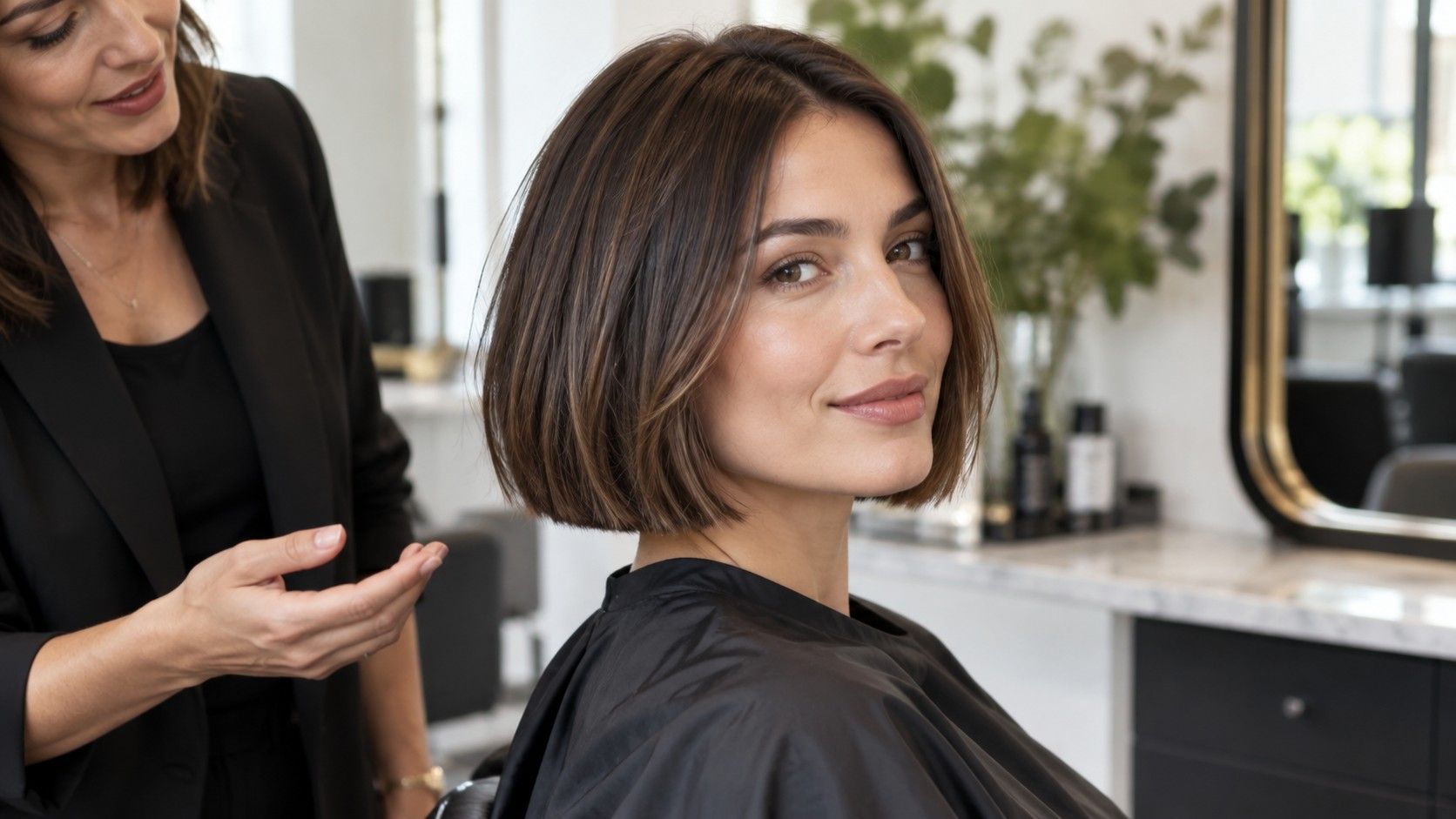
Start by looking at the face with your hair in its normal part. A sharp jawline can look excellent with a neat bob, a center part, and glossy straight hair. It can also look beautiful with airy layers and waves that break up the outline. Problems usually appear when the cut sends mixed signals: a blunt, heavy line exactly at the jaw combined with bulky sides can feel boxy, while too many short feathery pieces can make dense hair look uncontrolled. Choose one main idea and let the rest of the cut support it.
Place the length with the jawline in mind
Your lifestyle helps make that decision. If you like a polished, minimal look and are willing to use a dryer or straightener, a clean shape can be satisfying. If you wash and go, travel often, or have a natural wave, softer texture may be more honest to your routine. Neither path is more flattering by default. The right one should still look intentional after a windy walk or a long day, not only when every section has been styled in front of a mirror.
Pick a fringe that fits your part and growth pattern
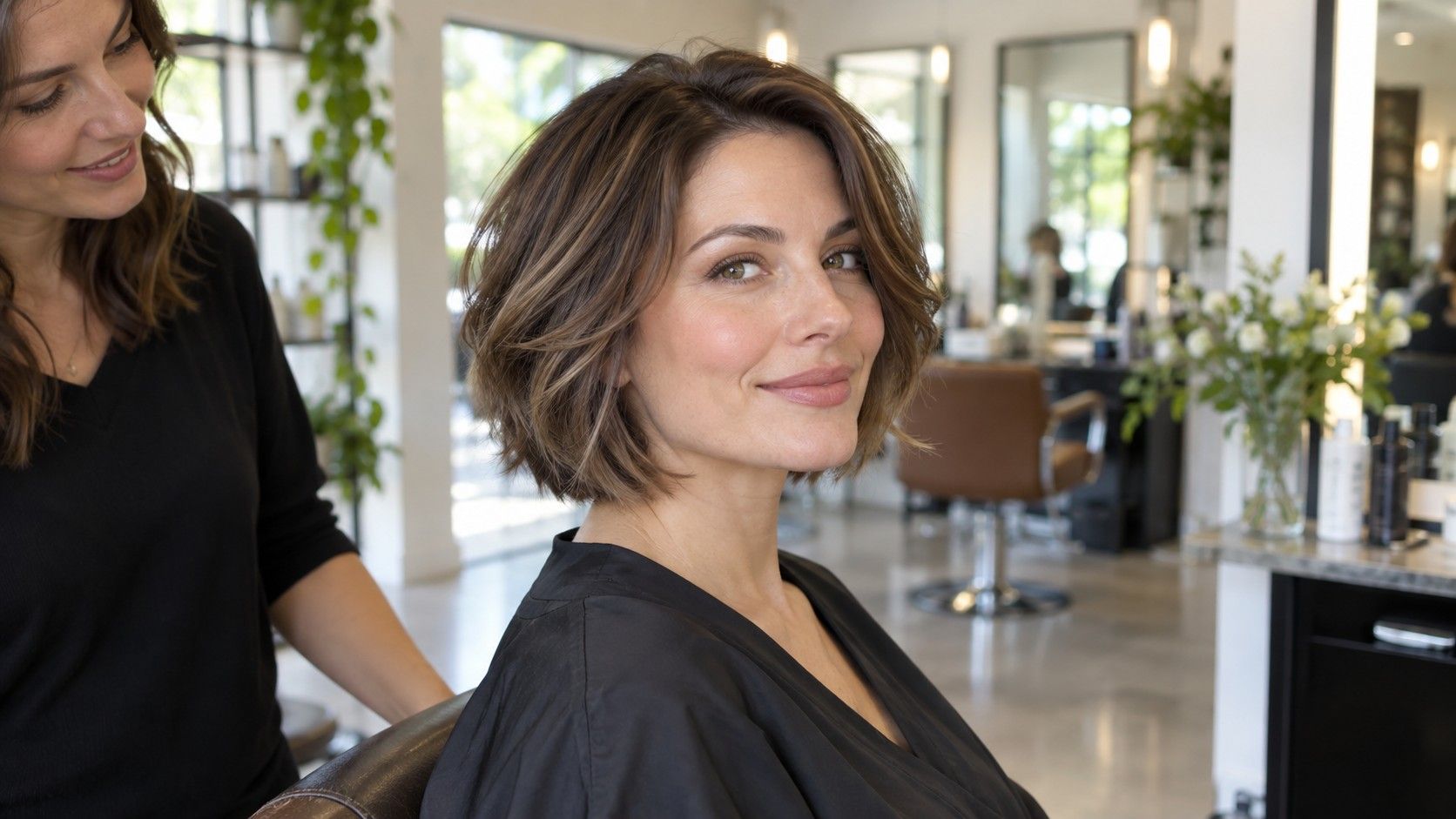
A long bob is one of the most adaptable haircuts for a square face because it can sit below the jaw while keeping enough structure to feel modern. A front that is slightly longer than the back creates a gentle diagonal, particularly when the ends are textured rather than cut into a hard shelf. Check where the front pieces land when you turn your head and when you wear a coat collar. A length that looks good standing still may constantly flip or catch if it rests exactly on the shoulders.
Long hair can soften the outline when it has movement beginning below the chin. Textured layers, a loose bend through the mid-lengths, and a side or off-center part all interrupt a strong horizontal line without making the hairstyle fussy. Short cuts can work just as well, especially a pixie with a longer top and a fringe that moves across the forehead. The important detail is not to add equal volume at both temples unless that is an effect you genuinely like; it can widen the entire silhouette.
| Option | Visual effect | Practical trade-off |
|---|---|---|
| Long bob below the jaw | Creates length and a controlled diagonal | Needs a trim to keep the perimeter intentional |
| Long layers and waves | Softens the outline through movement | May need a few minutes of styling for definition |
| Textured pixie with longer fringe | Shows the jawline while adding lift above | Requires regular shaping as it grows out |
Use layers and texture to control weight
Texture is useful when it is placed with a reason. On thick hair, removing a little internal weight can stop the sides from forming a rigid triangle, but aggressive thinning can leave the ends frizzy and disconnected. Ask for textured layers that are visible in the way you normally wear your hair. If you have straight hair, subtle movement around the lower face may be enough. If you have a wave, longer layers can encourage separation and stop the hair from settling into one solid block.
Soft waves are often recommended because they create curved lines around a square face, but they do not have to be formal curls. Try bending alternate sections in opposite directions and leave the ends less curled. That gives an irregular, relaxed finish instead of a pageant-like pattern. A small amount of lift at the crown can balance the jaw area, yet the goal is not towering height. It is simply to stop the hair from looking widest at the same point as the face.
A side-swept fringe naturally introduces a diagonal, which can be useful if you want a softer frame. It works best when the longest edge blends into a cheekbone or jaw-length layer rather than stopping abruptly. Curtain bangs can also suit a square face when they are long enough to part and move. A blunt full fringe is not forbidden; it creates a stronger horizontal emphasis, so it tends to look most coherent with a deliberately graphic cut and a controlled finish.
Before cutting any fringe, check your front hairline. A cowlick, a widow's peak, or a very fine hairline can alter how the fringe separates. Tell the stylist whether you wear glasses and whether you prefer to tuck hair behind your ears. Fringe length should be judged dry because a small change can move it from brow-skimming to awkwardly short. A good fringe is one you can restyle after sleeping, not one that requires a complete wash every morning.
Make the parting and finish work together
A center part emphasizes symmetry and can make a square jawline feel beautifully intentional, especially with a long sleek cut. A side part shifts weight and creates an asymmetrical sweep, often making a layered cut look softer without changing the length. An off-center part is a useful middle ground for people who dislike a deep side part but find a strict center line too severe. Try each position after the hair has dried naturally; the part that works only while wet is unlikely to stay there all day.
Product choice should support the finish rather than harden it. For waves, use a light cream or mousse that keeps separation; heavy oil can cause layers to collapse into one dark-looking mass. For a sleek bob, apply heat protection and smooth only the surface, leaving enough body at the roots. If you wear your hair up often, pull it into a low ponytail before the appointment and see which face pieces you actually enjoy leaving out. That small test avoids a cut designed for a styling habit you never use.
Explain your goal at the salon in concrete terms
Bring reference photos that show the same hair density and texture as yours whenever possible. Instead of saying you need to soften a square face, explain the result you want: more movement below the chin, less width at the temples, a fringe that can be swept aside, or a cleaner line around the jaw. Mention your styling tools and how often you book trims. A stylist can make much better decisions about the weight line and fringe length with those details.
Before leaving, ask how the haircut will change after six to ten weeks. A long bob may become a different shape as it reaches the shoulders; a short fringe can quickly become a curtain fringe; layers may need a small adjustment after the first home wash. Take note of the one or two steps that make the biggest difference, such as drying the fringe forward first or adding a bend below the cheekbones. Then the hairstyle remains yours, rather than a look that only existed in the salon chair.